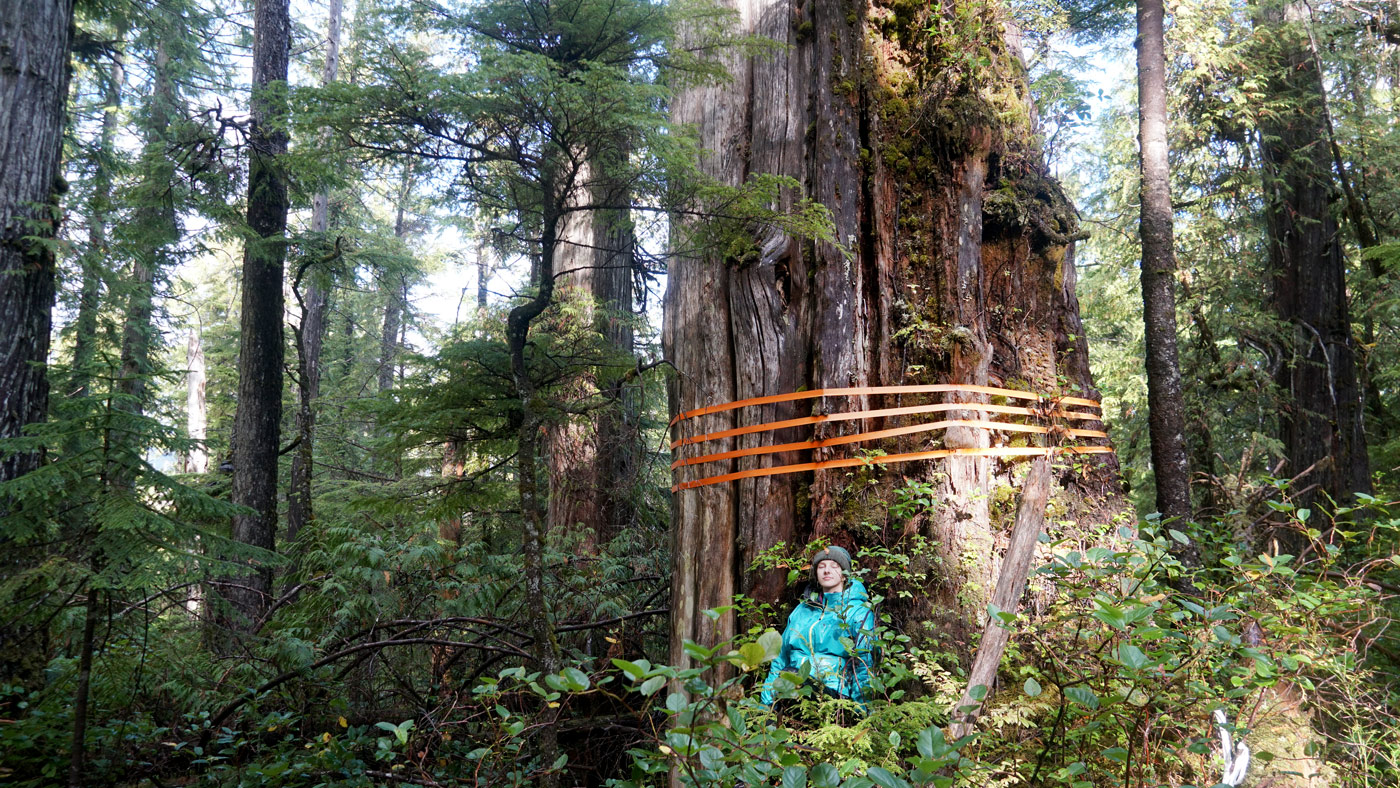
“Surely old-growth logging won’t be happening in five years.” That was my belief in 2020, when I was a 17-year-old activist who — almost by accident — helped initiate the Fairy Creek blockades and the largest act of civil disobedience in Canadian history.
The Fairy Creek blockade arose at the peak of the climate movement, inspired by groups like Extinction Rebellion and activists like Greta Thunberg. In that moment, it seemed inevitable that the old paradigm of forestry in BC would not last.
Today, that old paradigm seems more entrenched than ever, with old-growth deferrals getting canceled across the province and an NDP government more focused on short-term economic development than long-term sustainability.
Canada’s pledge at the 2022 Global Biodiversity Conference to protect 30% of land and water by 2030 appears dead in the water. Minister of Forests Ravi Parmar recently claimed that old-growth logging will “always be a part of [BC’s] forest sector.” (I need not explain the impossibility of that statement.)
At this moment, the prospect of true forestry reform in BC seems bleak. But Washington protected its state-owned old-growth forests 20 years ago and maintains a thriving forest products industry today. How did they do it? And what can Washington’s success teach us about BC’s forestry predicament?
It might shock you to learn that, despite its dismal reputation on the global stage when it comes to the environment, the US actually has stronger environmental laws than Canada.
In the 1990s, the Washington State Department of Natural Resources (DNR) found itself in a similar position to BC Timber Sales, with a degraded land base from which less and less old growth was available to log; ecosystems on the brink of collapse; and the loss of social license for logging old-growth forests.
Old-growth logging is going to come to an end one way or another. The only real question is: Will BC have any old-growth forests left when that happens?”
In 2004, the Washington State Legislature convened an independent panel of scientists to inventory and protect old-growth forests on state trust lands managed by the DNR. These state trust lands are analogous to Crown lands; they are publicly owned and managed by the state for revenue production. The DNR’s expert panel established three criteria for determining whether a forest stand qualified as old growth. Central to this definition was origin: stands had to pre-date 1850, i.e. to have existed prior to widespread European settlement. In addition to age, stands were required to meet specific structural characteristics associated with late-successional ecosystems and to encompass a minimum area of two hectares.
Under this framework, old-growth patches under two hectares would remain available for harvest. However, the DNR created an additional safeguard requiring that any individual tree exceeding five feet in diameter be protected as an individual “leave tree.” This provision ensured protection for the largest and most ecologically significant legacy trees, even in smaller or fragmented patches. To implement the policy on the ground, the DNR established a certification process for foresters to become “old growth designees,” trained to identify qualifying characteristics in the field and delineate the boundaries of old-growth stands prior to timber sale planning.
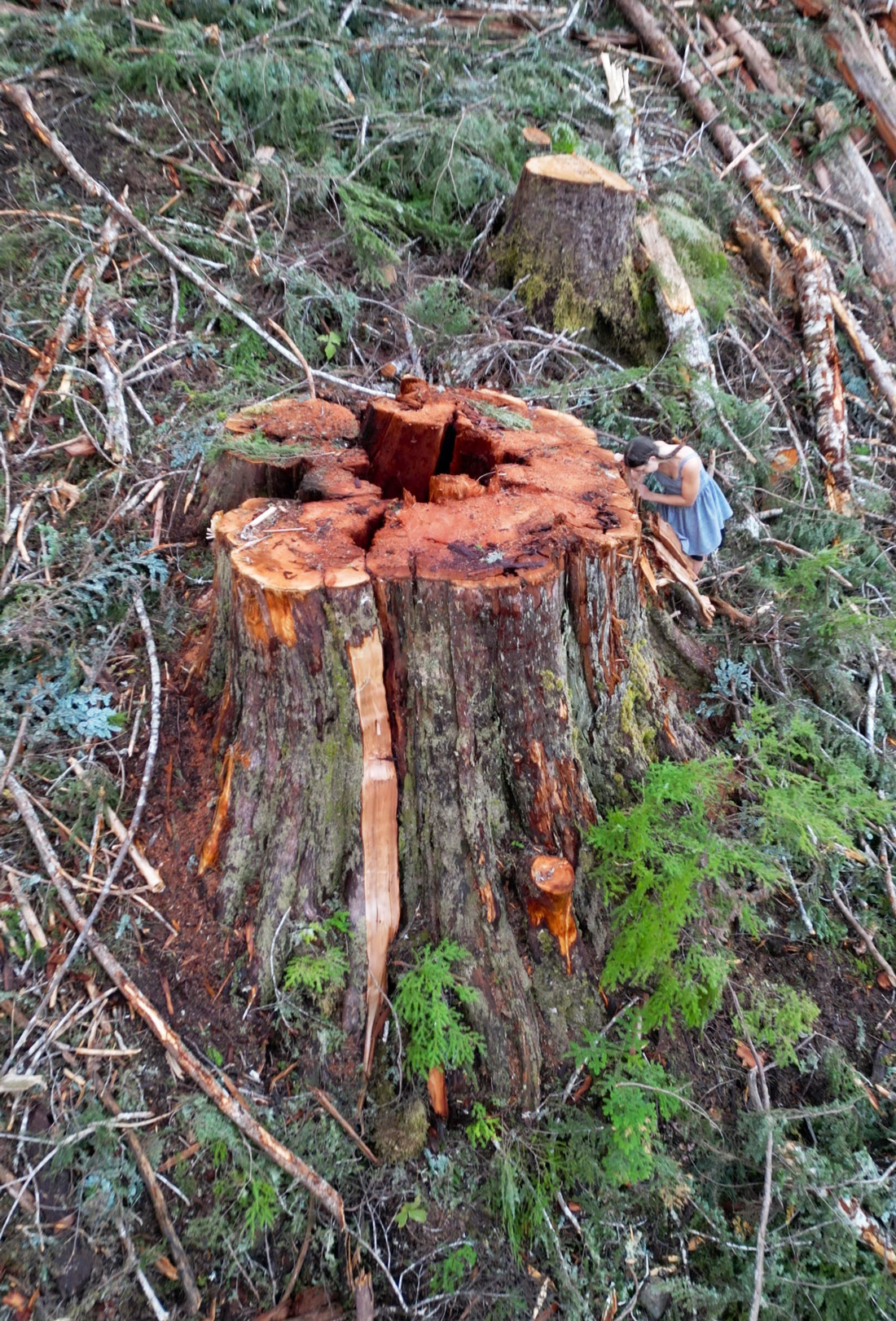
Massive old-growth cedar tree found in 2025 in a Western Forest Products cutblock near Grant Bay, west of Quatsino Sound. By Joshua Wright
This system is not perfect, but it resulted in the protection of approximately 29,000 hectares of old-growth forests in Western Washington, including every ancient forest on DNR-managed lands. It protected these forests while the DNR continued to generate hundreds of millions of dollars and over half a billion board feet of timber annually from its second and third-growth forests.
Had DNR failed to implement an old-growth policy, the agency likely would have clearcut all of its remaining old-growth forests within a decade, and the DNR would’ve been forced to transition to second-growth. Instead, the state legislature had the foresight to take action before old-growth forests had entirely disappeared from the land base.
Until recently, federal lands in the US benefited from additional layers of protection that, while not entirely ending old-growth logging, significantly curtailed it across much of the country. The Endangered Species Act has been the most powerful legal tool for old growth conservation in the US, effectively safeguarding nearly all remaining old-growth forests on federal lands in Washington, Oregon, and California to protect the northern spotted owl and marbled murrelet.
BC, though it presents itself as environmentally progressive, does not have an equivalent Endangered Species Act. It also no longer has a viable population of northern spotted owls. That’s not a coincidence.
Federal lands in the US also benefit from the Roadless Rule, which was created in 2001 under Clinton and is currently being dismantled by the Trump administration. This rule directed the US Forest Service to inventory all remaining roadless areas and prohibits most new road construction within those areas. The rule has protected nearly 24 million hectares of public land across the country, including some of the last remaining intact valleys in the lower 48 states, and millions of hectares of old growth in southeast Alaska.
The rapidly-dwindling mountain caribou herds in British Columbia’s interior depend on large, contiguous roadless areas for their survival. Their decline reflects the ecological consequences of the Province’s failure to adopt comparable landscape-level protections for roadless areas.
What does this mean for BC? Next time you hear the timber industry fear-mongering about the impact of a decline in old-growth logging, remember that old-growth logging is going to come to an end one way or another. The only real question is: Will BC have any old-growth forests left when that happens? And will the Province help communities that depend on old-growth logging transition to a value-added, second-growth forestry sector – or will it just abandon those communities when the boom is over?
Forestry watchdog Joshua Wright works to protect native forests through advocacy and citizen science. He is the director of the documentary Eden’s Last Chance.