Current Issue

Sept/Oct cover

The Boreal Deal
Industry and eco-groups have agreed on how to divide up the boreal forest
Methane
How Integrity vs integrity management play their role in pipeline ruptures and fugitive emissions 
Closing the Loop
Metals can be recycled almost without limits. Find out how that could help with greenhouse gas emissions
SLAPPS
The ramifications of Strategic Lawsuits Against Public Participation


ORDER single copies or bulk (for great discounts) here - You choose whether you want the print or electronic copy
OR Subscribe Now to either the electronic or paper version and we will send you the password for this new issue as an extra bonus!

The Boreal Forest Deal

by Delores Broten

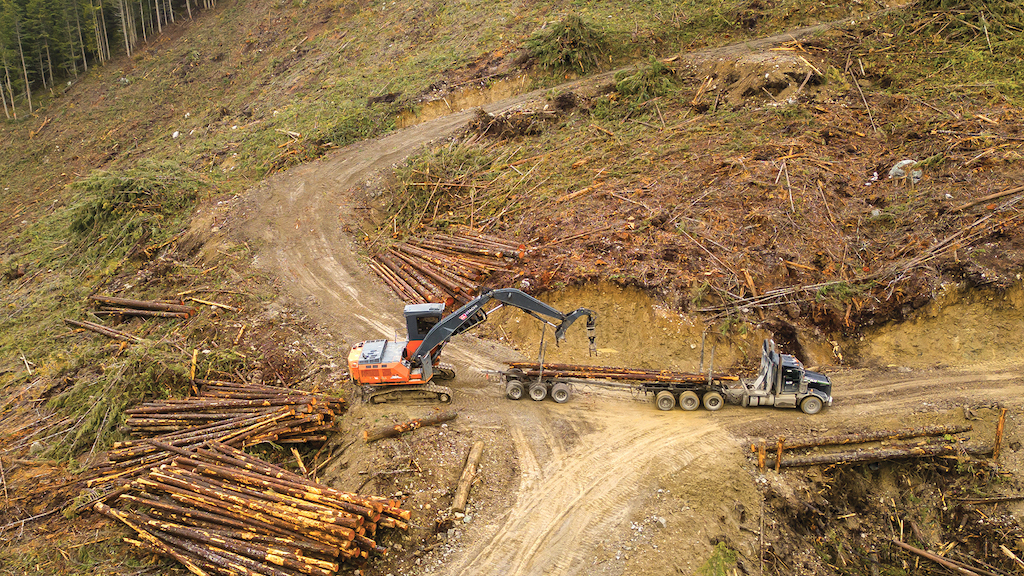
The Canadian Boreal Forest Agreement, billed in May by par­ticipants as "historic," appears to be constructed of a set of boxes within boxes. It is, says Aran O'Carroll of the Canadian Parks and Wilderness Soci­ety (CPAWS), an agreement between some major environmental or­ganisations and most of the Ca­nadian boreal forest industry on "how we are going to work together for three years." How­ever, critics say it could also be characterised as a deal between private partners over public and First Nations lands.

The Forest Products As­sociation of Canada (FPAC) has agreed that its members will not log, build roads, or plan logging on 29 million hectares of woodland caribou habitat before March 2012. Both O'Carroll and Avrim Lazar of FPAC agree that the companies had no plans to log much of that area in that time, only 72,205 hectares, according to Dawn Paley in one of the first critiques of the deal published in The Dominion (www.do­minionpaper.ca).

Driving a Highway Through Burns Bog

by Stephanie Orford

Should Delta sacrifice a keystone ecological region for a chance at economic growth? Many Delta citizens and en­vironmentalists are outraged by the proposed South Fraser Perimeter Road (SFPR), a four-lane highway to run along the south side of the Fraser River, and by their inability to give input on its development. The provincial government signed the SFPR design, build, finance, and operate agree­ment on August 12th with the Fraser Transportation Group, a conglomerate of companies that will build the road.

Eliza Olson, president of the Burns Bog Conservation Society, says the proposed highway would have myriad disastrous effects on Delta's Burns Bog and surrounding ecology. "We're not opposed to the road. We're opposed to its location," she told the Watershed Sentinel. "There are alternatives."

Environment Canada's Shame -- Shared by All Canadians

NIKIFORUK: What Those Who Killed the Tar Sands Report Don't Want You to Know

Why did a parliamentary committee suddenly destroy drafts of a final report on tar sands pollution? Here's what they knew. Andrew Nikiforuk runs through the shameful testimony the committee heard, and decided to hide, in the Tyee, Thurs July 15, 2010. Everyone in Canada should read this story, but....probably won’t. Gotta go to the mall, you know.

Shock Government?

We've understood the concept of disaster capitalism, and the shock doctrine used by the World Bank and the free marketeers to make national governments buckle under to a radical capitalist agenda, but now Sean Holman of Public Eye ("I'm not wearing a tin hat!") has unvealed the shock government requirements for senior government bureaucrats under the BC liberals.

Basically, the executives have to be able to manufacture crisis, to create the opportuniies to get public (and presumably employee) consent to actions they do not agree with. Such as....chopping social services, inflicting misery on the weak in our society, and selling public assets, from BC Rail to the forests and rivers.

You can read the job description here.

Reminds me of the comment in Barry Broadfoot's Ten Lost Years history of the 1930s in Canada  - along the lines of "If you know a man who was a banker during the depression, he is not a nice man." 

Low Greenhouse Gas Agriculture

Excerpt from Joyce Nelson's WS article, "Eating Our Way Back to the Future: Low Greenhouse Gas Agriculture"

Peak oil may soon give us peak food. As we run out of fossil fuels, food will get increasingly expensive not only to produce, but to import and export. Changes to this system can also be good news, however, since globally, agriculture and our industrial food system account for almost one-third of all greenhouse-gas (GHG) emissions that contribute to climate change. Changing how we farm our food can literally change the fate of the world.

"Low GHG agriculture" places top priority on soil restoration and on soil as a carbon sink. It looks to farming methods that are common practice in organic agriculture and, in some cases, practices that were widely used by Canadian farmers sixty or more years ago.Switching to organic, low GHG agricultural practices could not only reduce the 30 percent of GHG emissions that current industrial agriculture creates, but could also sequester through soil restoration another 40 percent of emissions globally. These practices include:

-      Banning synthetic fertilizers, which would lead to a 30 percent reduction of[agricultural] green-house gases.

-      Planting cover crops such as alfalfa, which is deep rooted and soak up heavy rains.

-      Reduced or no tillage on crop-land, as recommended by the UN's Food and AgricultureOrganization (FAO)  in order to increase the soil organic carbon.

Trophy Hunting of Bears

by Ian McAllister

In April, the BC government once again opened the gratuitous sport hunt of bears in the Great Bear Rainforest and across BC. The genetically distinct Haida black bear is being targeted as well as the monarch of the rainforest - the grizzly. Even the coastal black bear that carries the recessive gene that produces the pure white bear, or Spirit bear, can legally be killed in over 98% of its range. 

bears

In 2007, 430 grizzlies were killed in BC, 363 of them by sport hunters, making the year the highest rate of hunter-caused mortality of this iconic bear since records have been kept. In 2009, approximately 300 grizzly bears were killed. These sad statistics put the lie to the provincial government's own description of grizzlies as "perhaps the greatest symbol of the wilderness" whose "survival will be the greatest testimony to our environmental commitment." Many of these bears are killed within the 60 provincial parks and conservancy areas where it is still legal to trophy hunt bears and a disturbingly large percentage of the bears killed are reproductive -aged females. 

Air Pollution Monitoring

by Dave Stevens and Delores Broten

There is good reason to doubt that anyone in Canada  has a solid handle on how much air pollution Canadians are exposed to.

Pollution data comes mainly from two sources, self-reports by the polluters, published in the National Pollutant Release Inventory (NPRI) and ambient (outdoor) measurements taken by firms and governments.

Ambient air pollution monitors  are located where the pollution they assess  is, to some degree, representative of what people will breathe. In Smithers BC, where I live, the particulate matter (PM) monitors are co-located with St. Joseph's School in the middle of town. This is a common situation in BC.

Coalwatching - The Raven Coal Mine on Vancouver Island, BC

in

by Arthur Caldicott

Ten years ago Beanstalk Capital Corp. was a new company with nothing more than a listing on the TSE Ventures Exchange. Today it is Compliance Energy Corp., and its Raven Underground Coal Project is a proposal to mine 44 million tonnes (2.2 million a year) from a coal deposit near Fanny Bay on Vancouver Island.Click Here for Large Map of Raven Coal Mine
The Comox Joint Venture (CJV) - 60% owned by Compliance and 20% each by two Asian trading companies - owns about 29,000 hectares (ha) of coal on the Island, 3,100 ha of which are targeted for the Raven mine. The surface workings, which include a coal preparation and wash plant, storage and loading areas, and waste storage, would occupy about 200 ha. The two minority partners have put up $11 million to acquire the coal, and to explore and validate the Raven project.

Raven became public last August, when the CJV submitted a project description to the BC Environmental Assessment Office (EAO), and began building its consultation record by talking to various groups in the Comox Valley.

Waste-to-Energy Part 3 - Incineration

Excerpt from Part 3: Incinerators - The Next Generation "Waste Circus" Coming to Canada

by Joyce Nelson

Preferential Treatment

In Canada, the federal government has been doling out funding to the waste-to-energy (WTE) sector, with billions of dollars available both for WTE companies and for municipalities to invest in WTE incineration via P3s.

For years, the point-man on the WTE incineration issue at the federal level has been Bob Mills, the five-term (1993-2008) MP from Red Deer, Alberta, and one of the original Reform Party MPs. Before retiring from office in 2008 to become the registered lobbyist for Ottawa-based Plasco Energy Group, Mills was the Alliance/Conservative environment critic (as of 2001), then a member of the House of Commons Standing Committee on Environment and Sustainable Development (2005-2007), and then Chair of that powerful Committee (2007-2008).

By 2005, Mills had become a committed believer in gasification WTE incineration for MSW and had convinced his Red Deer constituency to take a trip to Germany to see WTE incineration in action.

Syndicate content