Municipal election season is here – that magical time every four years when lawn signs multiply like dandelions, candidates rediscover the existence of community centres, and a surprising number of people suddenly remember they live in a town with a mayor.
You know the pattern. Council ignores residents for three and a half years. Residents get annoyed. Residents get organized. A wave of righteous civic energy sweeps in and occasionally replaces a perfectly mediocre council with something demonstrably worse. Democracy in action.
But before you vote based on whoever has the most professional-looking sign or the firmest handshake at the farmers’ market – can we talk about water?
Yes. Water. The Thing You Drink Every Day.
Here’s a thought experiment: imagine the tap water quietly delivering asbestos fibres, pharmaceutical runoff, or PFAS – the “forever chemicals” that don’t leave your body any more than they leave the environment – directly to your family’s glasses.
Suddenly every other campaign promise feels slightly less urgent.
Safe drinking water is not a niche concern for people. It is the foundational public health issue. You cannot expand a community into a watershed you’ve spent a decade degrading and expect clean water to keep flowing. And when contaminants enter after your treatment plant? What then?
A few uncomfortable facts: British Columbia has the highest number of Drinking Water Advisories of any province in Canada. Not second highest. The highest. In a province that sells itself internationally on pristine wilderness.
Canada is also – pause for quiet national embarrassment – the only G7 country without national drinking water regulations. Everyone else has federal standards. We have a patchwork of weak provincial guidelines and municipalities are largely left to muddle through alone.
“Drinking Water Advisory” should not be a way of life in a wealthy democracy.
The 23-Question Stress Test
Bring these questions to every all-candidates meeting
Municipal candidates will cheerfully field questions about dog parks, roundabouts, and the approved shade of beige for downtown planters. They are less prepared for people asking questions about watershed management and their drinking water.
Let’s fix that.
What We Have
1. Where does our drinking water come from – surface water, groundwater, wells? If a council candidate can’t answer this in thirty seconds, that’s thirty seconds too long.
2. How sustainable is our water supply, and how much growth can it support before water rationing?
3. Is anything – or anyone – contaminating our source water right now? Are we in “monitoring the situation” mode (government-speak for hoping it fixes itself)?
4. If contamination is a risk, what’s the plan – with a timeline, a budget, and an official name attached?
What’s Going Wrong
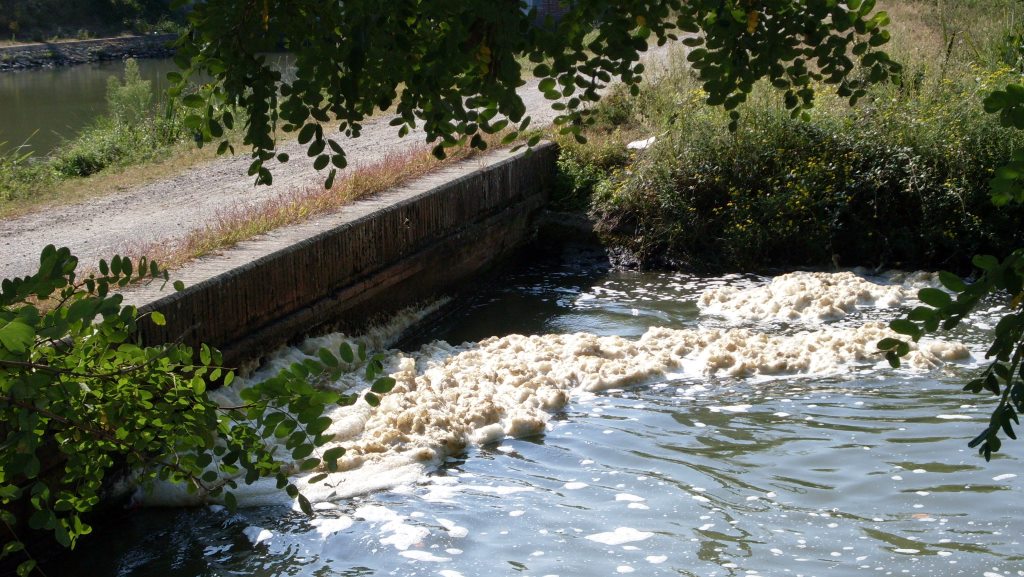
5. How often has our sewage overflowed into storm drains, creeks, or rivers? Residents deserve the numbers, not the spin.
6. Can our treatment system actually remove pesticides, pharmaceuticals, and PFAS, and to what percentage? “Meets standards“ is not the same as “removes 99% of forever chemicals.” Ask for the data.
7. What firefighting foam has been used in our area over the past twenty years? Did it contain PFAS? Could it have reached our source water? It doesn’t announce itself. You have to ask.
8. What funding applications have been submitted to upgrade our water treatment systems? If the answer is none – why not? Infrastructure money exists. Communities that don’t apply don’t receive. Inaction is a choice.
9. What PFAS testing is being done regularly on our land and water? “We haven’t found a problem” only means something if someone has actually been looking.
What’s Coming
10. What contracts or agreements – for data centres, bottling plants, or high-density development – are in place or under consideration that will affect our water supply? Full disclosure before the ink dries, not after the groundbreaking photo.
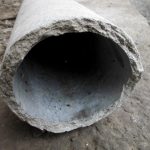
11. How many contracts have been awarded in the past decade for asbestos cement water pipe maintenance? This is a problem in the distribution system, after the water treatment process. These pipes degrade. They potentially deliver cancer directly to your tap. Residents have a right to know.
12. Tell us exactly where abandoned asbestos cement pipes have been left in the ground — leaching fibres into the water supply.
The Promises – The “Swear On It” Round
Will you:
13. Engage with the Federation of Canadian Municipalities on water protection? If not – why not? The wheel has been invented. Make the call.
14. Ensure our source water catchment area is protected from industrial over-extraction – or is it open season for anyone with the right permits and a thirst for profit?
15. Confirm our water treatment and wastewater treatment systems effectively remove the full BC guidelines list – arsenic, lead, asbestos, PFAS, pesticides, E. coli – right now, today, not theoretically?
16. Refuse to sign any water-related contract without full public transparency and a community vote? No more quiet backroom deals.
17. Will you require all asbestos pipe contracts to legally mandate removal or encasement — never abandonment underground?
18. Commit to removing all asbestos pipes unlawfully left in the ground by previous councils?
19. Mandate PFAS-free firefighting foam wherever contamination of land or water is possible?
20. Follow Tofino’s lead and ban single-use plastic water bottles? Tofino has done it, so can you.
21. Disclose negotiations with any industry that requires significant water extraction and make sure a community referendum is held first?
22. Initiate a municipal tax on industrial water users to compensate for the low provincial price they currently pay per litre?
23. Will you pledge to always protect public health and the environment – even when it’s inconvenient, unpopular with corporations or politicians, or bad for a ribbon-cutting photo?
A Final Word
In January 2026, the United Nations declared that the world has “entered an era of global water bankruptcy.” BC is burning hotter and drying faster every year. Doing nothing is not a neutral position – it is a slow-motion choice to leave your community, your children, and seven generations after them, increasingly vulnerable.
Water is not a policy file. It is not a line item. It is not something to get around to after the parking structure debate is resolved. These questions are equally applicable anywhere in Canada, not just BC.
Water is life. Right now, it’s asking urgently to be treated like it.
Speak up loudly! Repeat every four years until our representatives walk the talk.
Visit Prevent Cancer Now. Share this article. Ask questions. Make noise. Demand national drinking water regulations based on source water protection.
Susan Blacklin is the author of Water Confidential: Witnessing Justice Denied. The Fight for Safe Drinking Water in Indigenous and Rural Communities in Canada (2024,) and Water Justice: What you Don’t Know Could Kill You, released March 2026. She is a proud member of the National Council of Women of Canada (NCWC), which has launched a national campaign to raise awareness on this critical issue. The NCWC invites everyone to join in by reading, signing, and sharing its Open Letter. Visit www.ncwcanada.ca to learn more and add your name to the Open Letter today.