A common theme in climate action is preserving the natural world for future generations: the future parents, teachers, decision-makers, knowledge-holders, and storytellers.
Right now, Indigenous youth across BC are witnessing the firsthand effects of environmental decline. They are living through the erosion of the ecosystems that breathe life into their culture, while also navigating practical barriers, industrial pressures, and political decision-making that threatens their futures.
In March 2026, the First Nations Leadership Council gave a voice to future generations through the Uplifting Youth Climate Leaders Project, an initiative that supports Indigenous youth in climate leadership, advocacy, and relationship-building. The project included an in-person gathering hosted on the ancestral land of the Musqueam people, home to hən̓q̓əmin̓əm̓-speaking Coast Salish people, the stewards of the Fraser River for time immemorial. Through storytelling and knowledge sharing, the Youth Leadership Council (YLC) discovered common priorities that would later shape their Calls to Action presented at the First Nations Summit Climate Gathering.
The Calls to Action are grounded in their collective experiences spanning their different communities. Together, YLC demanded increased protection for lands, water, and salmon; more opportunities for land-based and intergenerational learning, and higher support for Indigenous stewardship and self-determination. Most important, the youth demanded that younger generations be given a meaningful voice in the decisions that they will ultimately inherit.
Fresh perspectives
Raised within Treaty 8 Territory, the traditional lands of the Dane-zaa and Cree peoples, Cassidy Keutzer fostered a deep respect for the land through hunting, harvesting, and exploring the outdoors with her family. Keutzer’s kinship ties stem from the Aniyvwiyaʔi and Chahta Nations of Oklahoma.
Keutzer described her upbringing rooted in traditional practices. “Before I could walk, I was put in slings and taken along on hunts.” Unfortunately, those memories now hold the impacts of deforestation witnessed in her backyard. “The mountain is missing its face. It’s a brand-new cut block, and it really stands out like a bald patch, devoid of life. When those mountains lose their foliage, it makes way for erosion and for slumping and mudslides.” She recounted a flood that took out her front yard, and the times her family was put on evacuation notice.
Some of her most cherished memories were gathering mountain blueberries on the mountaintop and foraging for morel mushrooms after wildfire season. “There was this mountain breeze that was just keeping the heat of the day off – warm and quiet.” Keutzer recalled. “You could hear the birds’ songs, and a couple of eagles overhead.”
For Keutzer, these are more than childhood memories; they are reminders of what is at stake, and why Indigenous youth must be included in environmental stewardship. “We’re a rung on the ladder on the way, but we’re not towards the top,” said Keutzer. “If we could be bumped up just a little bit more, then we could really start to see this new insurgence of youth leadership in the climate sector really start to take shape.”
“I think youth offer fresh perspectives – we bring energy to a space where burnout might be prevalent,” she adds. “As much knowledge as the older generation has, and the work that they’re doing, youth are right in the thick of the now.”
For the next generations
For Nunitsta (“the one that brings life into a room”) Rainwater Pootlass, climate leadership derives from her childhood learning from elders in her Nuxalk and Tsilhqot’in communities. “My grandpa always fought against clearcut logging,” Nunitsta recalled. “He ended up in jail for protecting the land.”
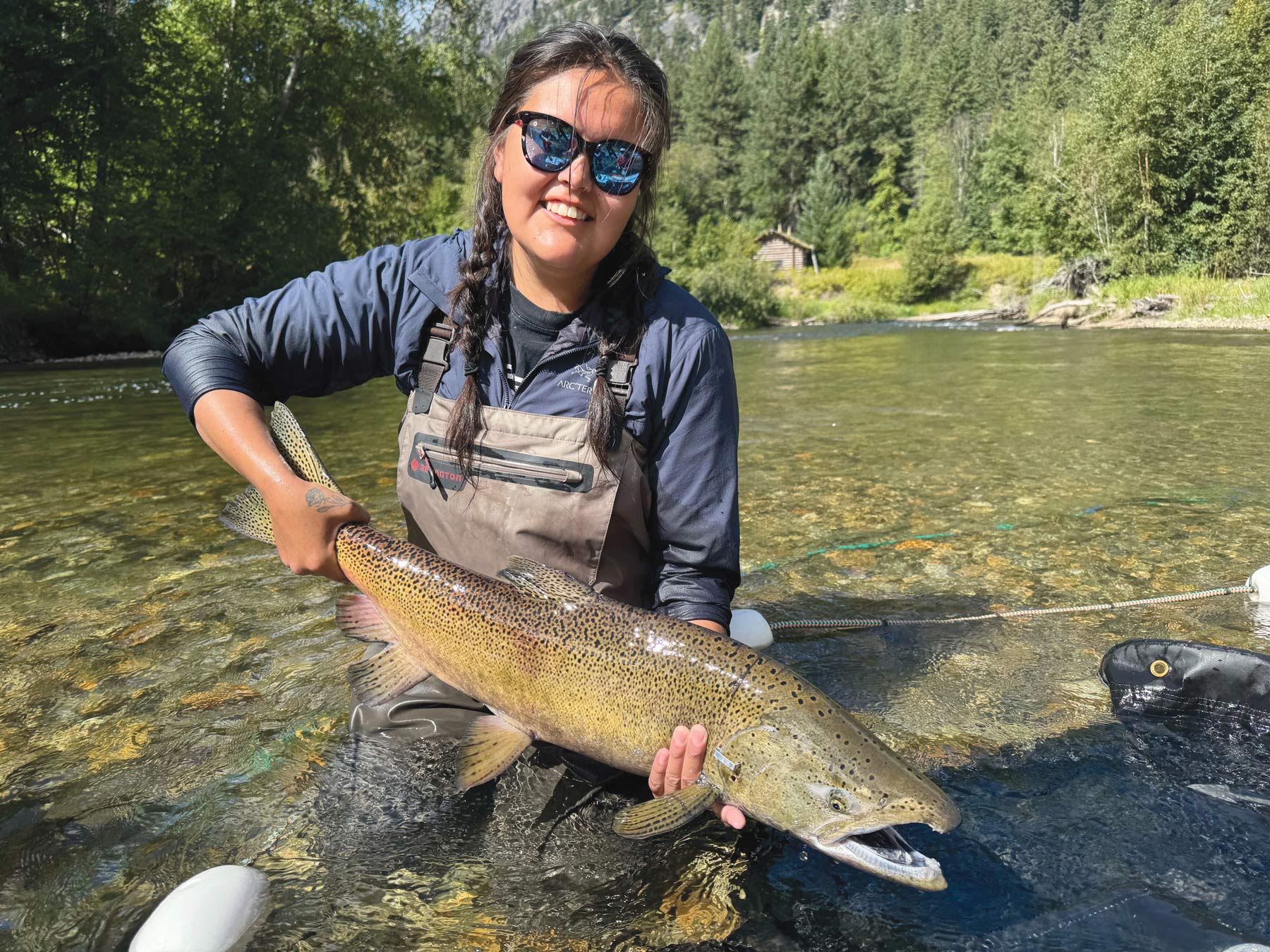
She explained that he built a sense of responsibility within her. “Always protect the land and try to make it easier for the ones that will come after you … Focus on the next generation.” Those teachings were reinforced by her father, who continued to teach her lessons from those already passed on, as they spent time on the land and sea. Today, Nunitsta works for her Nation as a Salmon Projects Coordinator, weaving Indigenous knowledge systems with fisheries science to monitor and preserve salmon populations.
Once upon a time, the horseflies would indicate that the coho were coming.
However, the most drastic changes aren’t found on graphs or data sheets, but her lived experience of displaced harvesting times. “If the salmonberries are coming out and the swallows are coming out, then that’s when we can start harvesting for Chinook salmon. Now that’s changed with climate change and rising sea temperatures.” She added that teachings from the elders don’t always reflect the modern changes affecting her territories. “Once upon a time, the horseflies would indicate that the coho were coming. You can’t really rely on that anymore.”
“I fear for the next generation,” Nunitsta said. She reflected on a conversation she had with her younger cousin that made her realize that younger people are noticing the impacts of climate change as well. Her cousin spoke of her childhood, watching their family spend more time harvesting and preserving salmon. “I don’t want her to feel terrified of not getting enough salmon for a winter,” Nunitsta said. Shortly after, she joined the YLC, determined to bring forward her concerns. She explained she wanted to pave the way to a better future, acknowledging that environmental changes pose a risk to youth engaging in cultural practices alongside their families. “We don’t want our younger siblings to have to face the same issues that we are currently facing.”
Holding on to hope
Despite the challenges they face, Keutzer and Nunitsta believe that with increased access for youth, change is inevitable. Nunitsta shares an optimistic view for the future. “It’s exciting to see the current youth generation wanting to protect or change things to make it easier for the next generation.”
“Hold on to some hope – don’t throw in the towel yet,” said Keutzer, “As youth Indigenous climate leaders and activists, we aren’t giving up anytime soon, and we still have so much hope for how things can improve and change for the better. Keep fighting the good fight!”
Pa̱x̱a̱la, Desiree Mannila, is a proud member of the Da’naxda’xw/Awaetlala Nation and Watershed Sentinel’s staff reporter.