As a child, I often walked through a forest near my house and into a huge field of breathtaking rolling hills. I would always pause to drink in the beauty. This was a magical place for me, the grass a welcoming green, the hills the perfect place just to sit and marvel at the beauty of nature.
Now the hills have been terraced, and homes abound where I once thought natural beauty would live forever. If I were to return to this place of joy and respite, I would be arrested for trespassing.
In 2025, it seems development may never stop reaching further towards the farms, hills, and forests that are the heart and soul of this country. On the rocky water’s-edge bluffs where the Arbutus menziessii ekes out its existence, the pressure to develop is intense and growing, driven by skyrocketing property values and the investor-oriented housing market.
The arbutus tree, also known as Pacific madrone, is a unique and resilient species found on the west coast of the US and Canada. No one can deny its beauty. The tree is unique in that it is evergreen but broad-leafed and sheds its paper-thin red bark in the summer. It is found only along the coast, perfectly adapted to shallow soils and rocky bluffs, but vulnerable to development, disease, drought, and climate change.
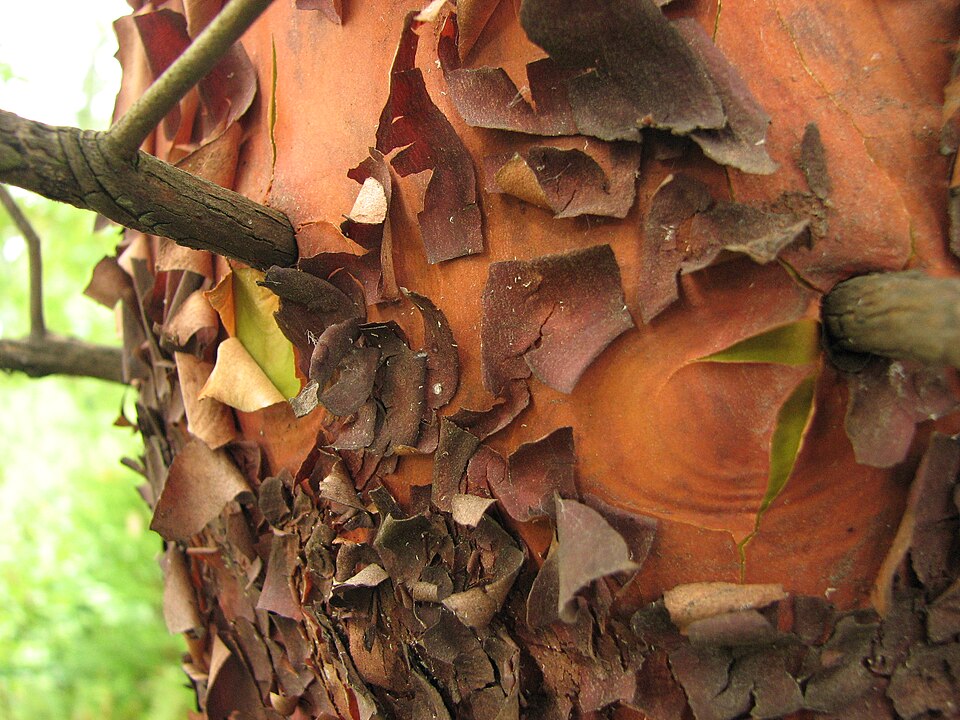
Pacific Madrone Arbutus menziesii Peeling tree bark | Photo via Wikimedia Commons
Coast Salish First Nations recognize the arbutus tree’s endurance, resilience, and strength. Different parts of the tree are used for carving and for medicines.
Arbutus trees are protected in many parts of BC, in part because coastal bee populations depend on their flowers. In municipalities like Victoria and North Vancouver, you can’t cut down an arbutus without a permit. But the skyrocketing value of waterfront habitat spurs greedy developers to find ways of getting around these laws. They are allowed to cut down these beautiful trees if they are within a building site, and with the breakneck expansion of home and business development, that could soon be everywhere.
Developers also sidestep the protection of arbutus trees by bulldozing, grading, and digging up the soil around the trees, which affects the root systems and eventually destroys them.
In the last few years, we’ve observed an alarming blight spreading through arbutus stands all over the south coast, attacking certain limbs of affected trees. The green, leathery leaves turn coppery brown. The cause can be drought, fungus, insects, or all three, but these trees are tough. They may lose a limb or two, but they almost always recover.
If you are lucky enough to have an arbutus on your property, respect it. Help it survive by watering it, keeping the area around the base free of debris, pruning dead branches, and making sure it gets everything it needs from the soil.
Leif Gregersen is an Edmonton-based writer, teacher, and public speaker who has written 12 books. Edmonton writer.wordpress.com