 Another holiday has passed followed by yet another January of reflections on the consumerism of the season. Yes, I also am guilty of the self-imposed pressure to “make good” under the Christmas tree. Old habits and vague childhood memories of how things could have been clung to me as I joined the frantic swell of holiday shoppers crooned to by Bing and Perry.
This year I did manage to restrain myself and have actually not gone into the New Year in debt.
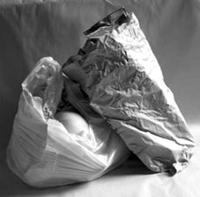
So even though I chose smaller and less, when I surveyed my well-hidden stash in order to sort and wrap, I was astounded by the number of plastic bags that I had amassed in the process of hauling the loot home. I know I should bring bags from home; I often say no to the cashier when they ask if I need a bag. I also try to spare trees by choosing plastic over paper but I’m never quite comfortable with the decision.
Brian Halweil of Worldwatch Institute says that “Compared with paper bags, producing plastic ones uses less energy and water and generates less air pollution and solid waste. Plastic bags also take up less space in a landfill.”
On the other hand, they are manufactured from petroleum and often never make it to the landfill. Instead, they litter our roadways, forests, and beaches, sometimes to the detriment of birds and other creatures.
Here’s another twist. In his article Paper or Plastic? What’s the environmentally correct choice? Aviya Kushner quotes Peterson of the Sierra Club. “If you recycle your bags, but drive your SUV to the grocery store, the gas-guzzling vehicle is having a much larger impact. And what you’re buying there is important too. If it’s an artificial cheese product, that’s not helping either. What you drive and what you eat are the two biggest decisions you can make, along with how much you drive. The third biggest factor is your household – how big your house is and how insulated it is.”
Okay, so this bag stuff may just be a drop in the bucket, but the following points taken from Good Stuff? provide rich food for thought.
§ Factories around the world churned out a whopping 4 – 5 trillion bags in 2002, ranging from large trash bags to thick shopping totes to flimsy grocery sacks.
§ North America and Western Europe account for nearly 80 percent of plastic bag use.
§ Each year, Americans throw away some 100 billion polyethylene plastic bags. (Only 0.6 percent of plastic bags are recycled.)
Imagine what this would mean if they/we chose paper over plastic? The next time I head to the stores, I’ll be more diligent and check that I have my stash of recycled or, better yet, hemp canvas bags handy.
For more ideas on responsible consumerism, go to www.worldwatch.org and look for the free, downloadable pdf, Good Stuff?
***
The ramblings above were from the desk of Kathy Smail. If you would like to add your thoughts or would like more information, please contact the FOCI Resource Centre. Phone: 1- 250-935-0087 Email: foci@island.net Mail: Box 88, Whaletown BC, V0P 1Z0
[From WS January/February 2005]