The village of Cumberland, a former coal-mining centre on Vancouver Island, is exploring the possibility of harnessing geothermal energy from the water in abandoned mine shafts.
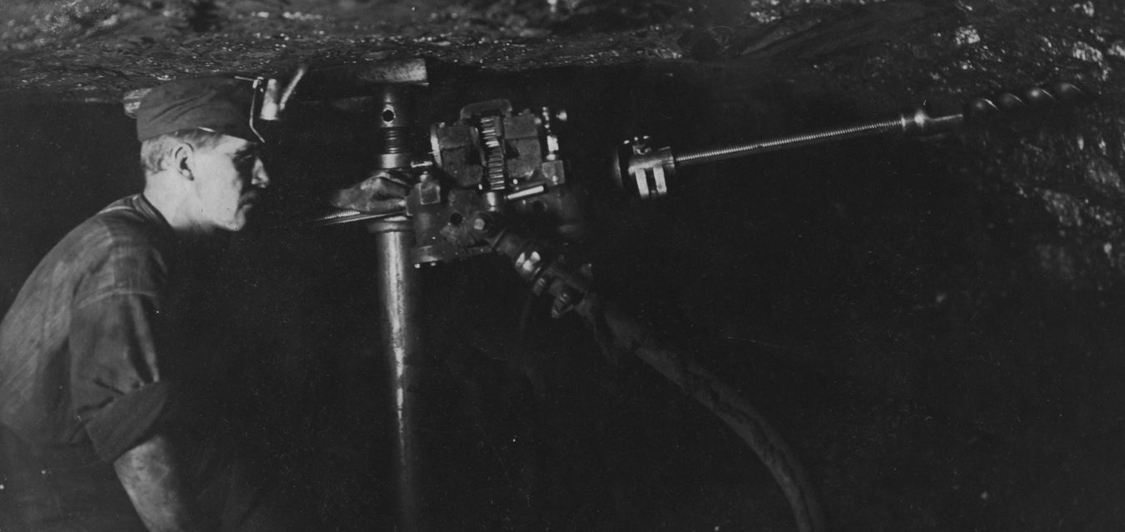
The ground beneath the town of 5,000 is riddled with abandoned drifts from eight coal mines that operated from 1888 to 1966. More than 16 million tonnes of high grade coal was extracted and shipped around the world.
Flooded mines are a source of geothermal energy because the water trapped underground gets heated from the Earth’s core, and the rock serves as a buffer, helping the heat stay there all year round. Geothermal energy – heat from the earth – has huge benefits: it is available 24/7 all year round, it has a very small footprint with net zero emissions, and it is carbon-free.
Cumberland’s pilot project is being conducted through a collaboration between the federally funded Accelerating Community Energy Transformation (ACET) program and Falcon Engineering.
An estimated 321 people lost their lives in the mines between 1888 and 1966
Cumberland mayor Vickey Brown, whose family has lived in town for five generations, prompted the project. She wanted to find out how coal mines could potentially be used as a resource for sustainable development in the community.
The flooded mine shafts can serve as a fire reservoir, so that municipal drinking water supplies aren’t used to fight fires, the mayor says.
“Exploring the mine water has brought up a lot in our community. Intergenerational trauma lives on,” Brown says.
Miners were exploited and their conditions were very dangerous – an estimated 321 people lost their lives in the mines between 1888 and 1966. “I think telling that story and then using that remnant water to do something really positive to fuel our future would be just amazing.”
Sophie Janke is an engineer and technical researcher who joined the Cumberland geothermal project in March. She currently works on phase one of the project, doing geological research, investigating viable pathways for energy integration, and assessing broader potential.
“Canada actually has an advantage when it comes to geothermal.”
Janke says that it’s been about 100 years since anyone physically descended into the mine shafts. The key to success, she says, is assessing what the water is like down there, how moving it impacts the surrounding area, and what opportunities for community development exist.
Meanwhile, a team of geologists is researching historical records from the coal mining era and cross-referencing with modern GIS technology.
It takes a village
As much as this is an energy project, it is also a community project. According to Janke, the project is supporting community members to find the potential of the mine and explore “water resources for sustainable development in Cumberland.” The goal, she says, is to “provide knowledge of the resource and capacity to get them closer to whatever they want to do with that knowledge.”
Falcon Engineering, a local company, is currently working on finding the best place for the drilling based on research, historical records, and local people with knowledge of the town. After the drill is positioned, a pumping system would be installed and perform tests to gauge how much water is in the mines, its temperature, and what happens when it is removed and pumped back in.
Phase one of geological research is expected to be finished by the end of the year, and that’s when the findings will be available for discussion. As soon as Janke gets the engineers’ reports, she will assess how the data aligns with concerns about water, wildfire, economic and sustainable development, and overall vision of residents for a thriving community.
Village officials hope that the successful execution of this project would bring more development into the industrial part of town, creating jobs as well as tax revenue. The mayor and council are guiding the process, and they are hoping that the best-case scenario would be getting the shovels in the ground next summer.
Learning from Springhill
On the other side of the country, Springhill, Nova Scotia – famously the site of horrific mining disasters in 1891, 1956, and 1958 – is already using its flooded coal mine. The 17°C mine water heats its fire hall and community centre and cools the arena, according to Emily Smejkal, a professional geologist and research fellow at the Cascade Institute.
Part of the work that the University of Victoria is doing through ACET is looking at Springhill as an example of what Cumberland could accomplish.
Smejkal explains that the Cumberland project would use a minimum of two wells. One well would produce the warm water that’s already sitting in those mine shafts beneath the town of Cumberland. Once the energy is taken out of that water, it will be injected back into the mine stock, so it works as a closed loop continuously circulating system. Only what already exists in the subsurface will be used.
An operation like this is closely watched and regulated by the provincial government to minimize risk. As development progresses, the town will have to follow a set of rules for safety. One potential risk to homes and businesses is the fact that many of them are built right on top of the abandoned mines. But the town has been sitting on top of the coal mines for almost 100 years, and monitoring wells were installed to detect early signs of gas release or collapse.
“Canada actually has an advantage when it comes to geothermal. We can lean into our expertise in mining,” Smejkal says. “Oil and gas… is the same technology we could use to extract geothermal energy.”
Alyona Latsinnik is an undergraduate student in Indigenous/Xwulmuwx Studies and Journalism, living on unceded Quw’utsun and MÁLEXEȽ territories.