 by Lisa Matthaus
Polling consistently shows that British Columbians have strong environmental values, some of the strongest in Canada: from protecting salmon to keeping our coast and streams free from oil spills, British Columbians across the political spectrum speak loudly and proudly to defend our natural legacies.
Yet rarely do these values translate into a government willing to prioritize environmental safeguards, investments and opportunities. Environmental commitments often seem to be seen as frills or an afterthought in a party platform rather than a fundamental, well-conceived and integrated plank. This makes such commitments easy to jettison should they come into perceived conflict with other, ‘must have’ commitments such as jobs or provincial revenues.
How to fix this? For some, the answer has been to try and get one party elected or another, believing that if we just had the ‘right’ government in place they would be able to deliver on environmental protection.
But there are two flaws in that reasoning: first, BC politics tends to swing, making environmental statutes enacted by one government vulnerable to elimination by the next (for example, the moratorium on grizzly hunting, or Forest Practices Code), which lacks the consistency necessary to ensure environmental protection over the long term. It could also imply the environment is ‘voted out’ when government changes.
Second, environmental values don’t map solely to one side of the political spectrum: BC’s greenhouse gas emissions reduction targets and carbon tax were part of the most ambitious climate action policies in Canada of the past decade, and were brought in by a right-of-centre government in the belief that their constituency would support these actions. Polling has demonstrated they were right.
Several environmental organizations have instead taken the approach that all parties need to understand that environmental values are fundamental values for British Columbians, along with health care, education and the economy, not just bells and whistles. Ultimately, no party that aspires to govern BC should believe they can do so without a credible, thoughtfully-articulated environmental platform, and a track record to back it up.
Opportunities to Act
We may still be a couple of elections away from that full understanding, but there’s no time like the present election period to let parties know that there are votes to be gained with a credible and integrated environmental platform. Key ways to do this generally involve talking to your local candidates, taking every opportunity to let them know their environmental commitments – or lack thereof – are some of the main factors that will influence your vote. Some upcoming opportunities include:
• Every time a canvasser comes to your door over the next couple of months, instead of an annoyance, see it as an opportunity to get that message across, regardless of which party they’re with: ask about the candidate’s position on an environmental issue of importance to you – locally or provincially – and let them know if that response is satisfactory. If the canvasser at the door doesn’t know the candidate’s position (they’re generally volunteers so aren’t always well-versed on every issue), ask for them to get back to you with a response.
• Ask environmental questions at all-candidates’ meetings. Many organizations will have materials on their website that can help you form questions, or suggest questions directly on various issues – pick some that are close to your heart and hit the mic! Many other attendees will also be interested in the response.
• Check out the Facebook and Twitter feeds of candidates – again, you can look to environmental organizations’ web pages for suggested tweets and questions.
• Watch for various action opportunities from environmental groups you’re active with. There will be lots of ways to email all the parties and/or your local candidates to let them know what’s important to you. The more personalized the better! Make sure you’re on the email lists of one or more organizations to keep up to date on issues and actions, especially once the writ drops April 16th. Under election advertising rules there are limits on ‘public advertising’ that currently appear to limit a lot of what you might consider ‘normal’ communications by environmental organizations, especially on websites or Facebook. But those limits don’t apply to communications directly to members, e.g., emails, so make sure you’re on key lists to stay updated on your issues.
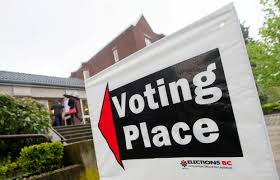
• When it comes time to vote, ensure environmental issues are part of the mix of issues that inevitably inform your choice.
• Post-election: find opportunities to let your MLA know how their environmental position, or that of their party, influenced your vote, and will again in the future. Tell them you’ll be watching their environmental performance as much as their economic or social policy performance – whichever party they’re with!
This is the on-going work of shaping our political discourse to ensure it delivers governments that are more aligned with our deeply-held values. An election is the main time the parties really have to take note of what they’re hearing from the electorate – all their ears are open! Make sure they hear about the importance of BC’s environment and the role it should play in our future.
***
Lisa Matthaus is with Organizing for Change, a project of several BC environmental organizations. Organizing for Change will provide several ways for you to take action this election; get in the loop by signing up at www.organizingforchange.org.