One year ago, the Canadian Biotechnology Action Network (CBAN) warned of the new threat of “backyard GMOs” — genetically modified salad green seeds marketed to home gardeners (Watershed Sentinel, April-May 2025).
But instead of salad greens, it turns out the first GM seeds sold for planting in Canadian backyards are GM tomatoes.
Until now, the only Canadian-grown GM vegetable was GM sweet corn, and those seeds are only available in big quantities for large-scale growers. Most of Canada’s GM crops – corn, soy, and canola – are grown for processed food ingredients and animal feed.
Until January 2026, small growers were largely insulated from the impacts of patented seeds and the risks of GM contamination. But then a small US biotechnology company started selling a limited quantity of GM tomato seeds online.
The new GM tomato seeds – marketed as “The Purple Tomato™” – are not clearly identified as genetically modified, and home gardeners should take note. Backyard genetically modified organisms could be a new source of GM contamination through our seed and food systems.
Inherent risks and unknown effects
As CBAN reports, releasing GMOs into our food system and environment is an ongoing experiment. The processes of genetically engineering plants and animals can have unintended effects. GM contamination of indigenous corn varieties in Mexico resulted in unexpected traits being expressed in the plants, jeopardizing local food security. Potential risks from eating GM foods have not been fully investigated, and there is no scientific basis to conclude that all GM foods are safe. GMOs have already driven the evolution of weeds and insects that are resistant to the toxins meant to control them.
A purple trial balloon
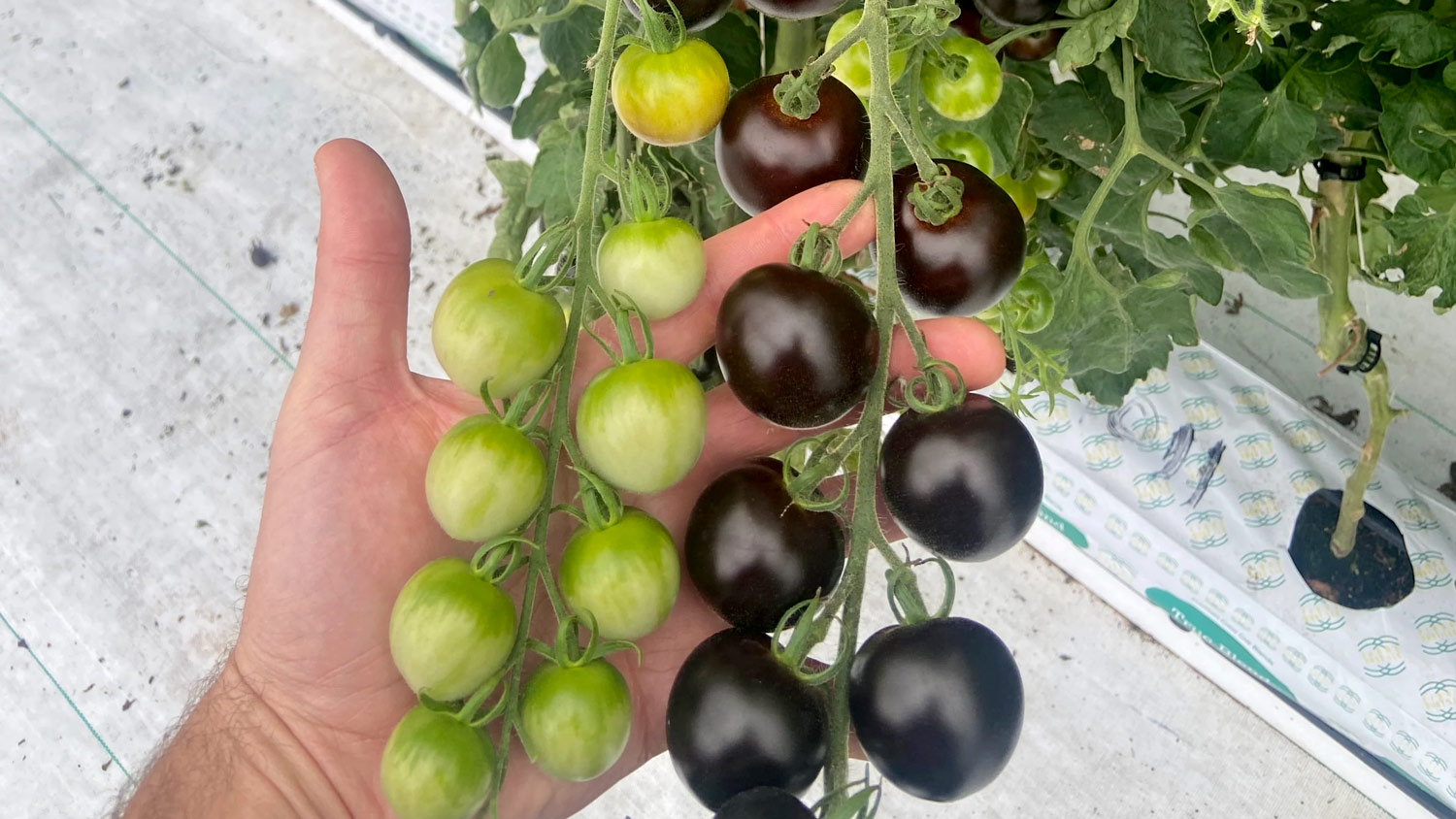
The new GM tomato, approved last year, is an attempt to break open the market to GM fruits and vegetables following the failure of the Flavr Savr™ tomato, which was taken off the North American market in 1997. The Purple Tomato™ was engineered with genes from snapdragon flowers to increase the plant’s anthocyanin production. Anthocyanins are flavonoids that give blueberries, eggplants, and some existing tomatoes their vivid colours.
Health Canada says that the GM purple tomato has anthocyanins in the same range as these other, existing purple foods, including some of the other purple tomatoes already on the market. Nathan Pumplin, the CEO of the biotechnology company Norfolk Healthy Produce, says it is “a fun product” because it has a deeper purple colour inside and out.
The GM tomato is a niche product but it could nonetheless have a major impact. The company Norfolk Healthy Produce was set up just to sell this product, as a test of consumer tolerance for GM produce and an attempt to open up a previously untapped target market for the biotechnology industry: home gardeners.
Unlabelled GM seeds
According to the latest consumer poll from October 2025, 83% of Canadians want mandatory labelling of genetically modified foods. This level of support has stayed consistent since 1994, and yet there is still no labelling law in Canada.
This lack of mandatory labelling extends to GM seeds and means the GM purple tomato seeds and seedlings are not clearly labelled as genetically engineered. The packets display the word “bioengineered” in the product slogan, but the lack of clear labelling puts the onus on customers to do their own research if they want to purchase non-GMO seeds and seedlings.
Most major seed companies that serve home gardeners have non-GMO commitments. However, garden centres may lack clear sourcing policies for non‑GMO seeds or seedlings.
Threats to seed savers
Although tomatoes are self-pollinating, the risk of contaminating non‑GMO and heritage tomatoes remains serious because pollinators can carry GM pollen from yard to yard. If tomatoes are just the first of many GM garden seeds, the risks to our seed supply and to neighbouring farms will increase as more types of GM seeds enter the market.
“Selling genetically engineered seeds to home gardeners is reckless and could jeopardize our ability to provide customers with organic and other non-GE choices,” said Mel Sylvestre of Grounded Acres Organic Farm in Gibsons, BC. “If widely planted … these GE seeds pose an unnecessary contamination risk that could threaten heritage seeds and our tradition of seed saving.”
We do not yet know how these companies will enforce their intellectual property rights in gardens across the country.
The threat of GM contamination is also important because the new gene sequences are corporate property. Companies control GM seeds through patented gene sequences, and we do not yet know how these companies will enforce their intellectual property rights in gardens across the country. For example, The Purple Tomato™ is patented, but the company encourages people to save, replant, and share the seeds from the GM fruit, as long as they don’t sell the fruit, seeds, or plants. This restriction is in the terms and conditions on the seed packets, but the company owns the rights to the patented
gene sequence in the seeds no matter where it shows up or how it got there.
Kim Delaney, founder of Hawthorn Farm Organic Seeds in Mount Forest, Ontario, is one of many seed producers opposing the release of GM garden seeds. Delaney already offers organic purple tomato varieties like Dancing with Smurfs, that were purposefully bred for the same trait now being marketed in The Purple Tomato™.
This new risk to seed savers has organizers of annual seed exchange events on high alert. Seedy Saturday events began in the 1990s to keep seed diversity alive, protect heritage seeds, and respond to increasing corporate control. The events center around the growers sharing and swapping seeds from their own gardens. Event organizers may need to vet their vendors to make sure they are not selling GM seeds.
In December 2025, over 160 farmers in BC and Ontario signed a declaration opposing the sale of genetically engineered vegetable seeds in Canada. Kim Delaney declared, “We should reinforce our local seed systems and reject genetically engineered seeds from US and multinational biotechnology companies. Canadian seed sovereignty should be a priority for all levels of government.”
Fionna Tough is an outreach officer at the Canadian Biotechnology Action Network. To learn more and take action, visit www.cban.ca/SeedsAction.