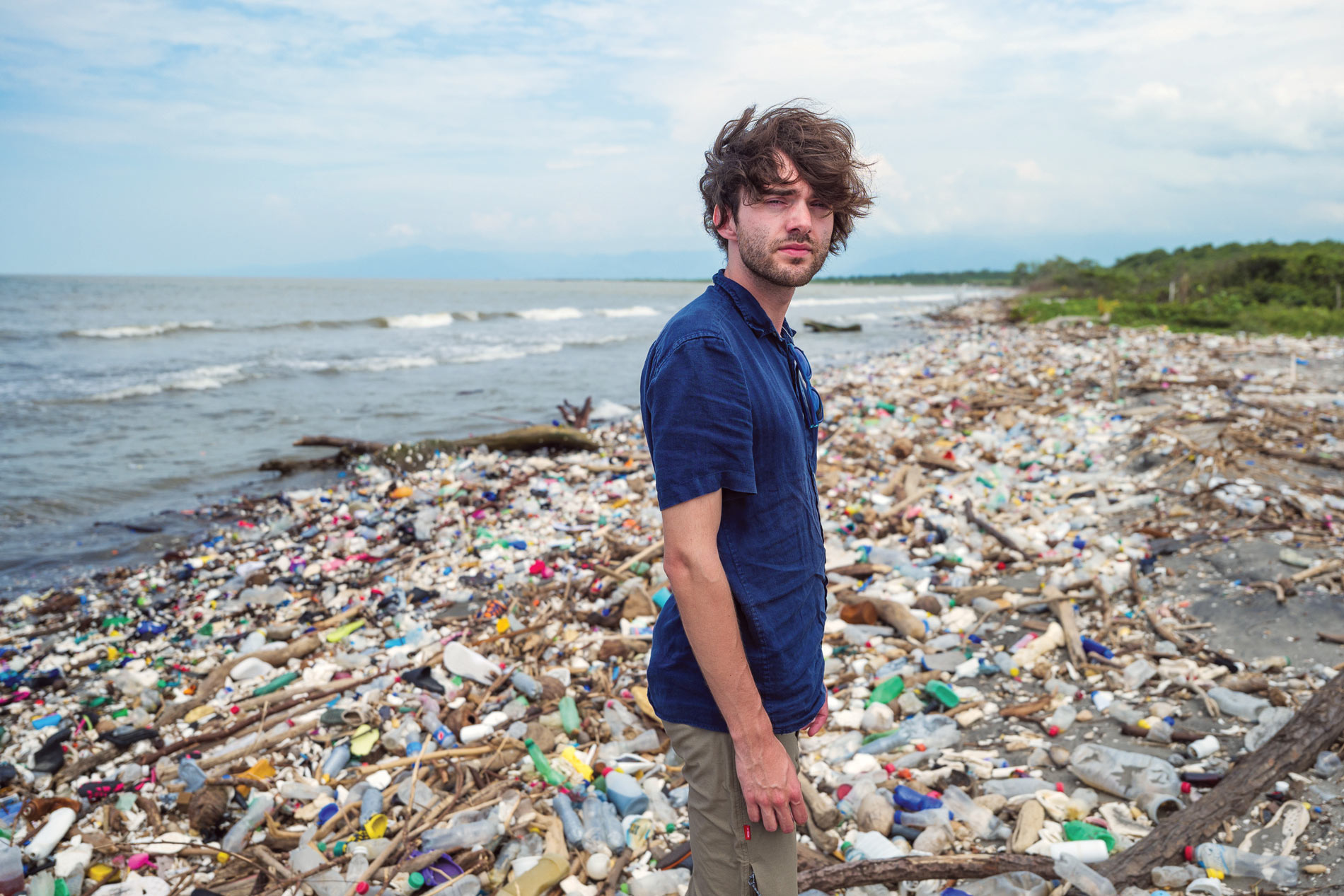
Each year, an estimated 11 million metric tons of plastics flow into the ocean, the equivalent of a garbage truck emptying into the water every 45 seconds. Sea turtles swallow floating bags they mistake for jellyfish. Beaked whales, which hunt by echolocation, mistake plastic for squid because it reflects sound in a similar way.
Researchers estimate that up to 90% of living seabirds carry traces of plastic in their bodies. One shearwater chick was found with 778 pieces in its stomach. Once in the water, plastic breaks into microplastics that spread through the food web and carry chemical contaminants up the chain. That is why people are at risk too, especially coastal communities that depend on a healthy ocean.
Recycling efforts are not keeping pace either. Only nine per cent of all plastic ever made has been recycled, and without some kind of change, ocean plastic could triple by 2040. Solving a problem of this magnitude would take a fundamental rethinking of how we produce goods; something that very few are willing to do. However, several conservation groups are putting in the work and tackling this issue head on, by clearing plastic from rivers and remote shores.
Tackling the trash tide
On a remote beach near Cape Scott, at the northern tip of Vancouver Island, a small crew sorts bags of foam, rope, and bottles and waits for a helicopter. On a river in Indonesia, a solar-powered barrier guides floating trash onto a conveyor belt. Both are working towards the same goal, but in very different ways.
A one-size-fits-all view of waterway cleanups is fundamentally flawed, therefore tackling the plastic problem requires different approaches.
The Ocean Cleanup and Living Oceans Society are easy to pigeonhole: one a polished organization, one a scrappy group; one with resources and power, the other rough around the edges and full of local grit. The question isn’t which model is better; it’s which tool fits the job.
An Interceptor can’t be moored in San Josef Bay, and a crew of volunteers wouldn’t make a dent in the Great Pacific Garbage Patch. Each approach is appropriate to the place and problem it tackles, and each covers what the other cannot. A one-size-fits-all view of waterway cleanups is fundamentally flawed, therefore tackling the plastic problem requires different approaches.
The Ocean Cleanup organization came out of a teenager’s ocean dive in Greece. At 16, Boyan Slat saw more plastic bags than fish. He researched the problem for a school project, and his 2012 TEDx talk on cleaning the oceans with technology went viral. That momentum let him leave school and found the project a year later, at 18. Today it is a Rotterdam-based nonprofit with more than 150 professionals, fully reliant on donations from individuals, corporations, governments, and institutions.
The seemingly endless resources of The Ocean Cleanup give it huge reach and power. Rivers carry a large share of that plastic to the sea, and what is already afloat will not vanish on its own or break down anytime soon. The organization says the harm reaches nearly 900 marine species.
The Ocean Cleanup’s response to this issue is two-pronged: first, stop plastic in the rivers before it reaches the sea, then remove legacy plastic from the gyres, with a target of clearing 90% of floating ocean plastic by 2040. An ambitious but admirable goal.
The plastic crisis will not be solved by one machine or one beach, and cleanup alone will never be enough.
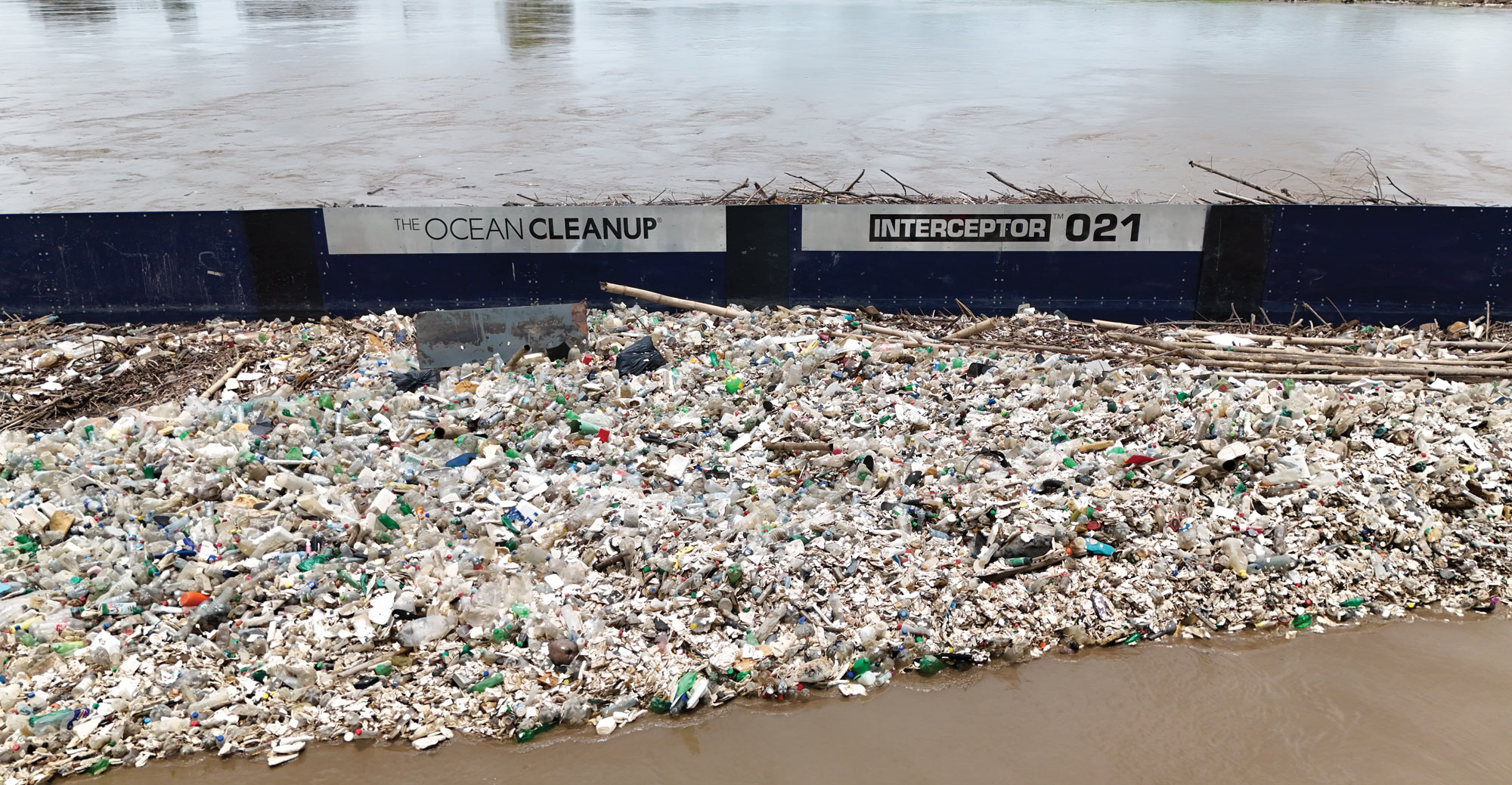
The river cleanup relies heavily on the Interceptor system, which Slat unveiled in Rotterdam in October 2019. The solar-powered vessel is moored in a river, guides floating waste into an opening at its bow, and carries it by conveyor into dumpsters, texting local operators when it is full.
Slat called rivers “the arteries that carry the trash from land to sea.” The Interceptor’s launch answered critics who had faulted the group for focusing only on plastic already floating in the ocean. One of them, Wageningen Marine Research’s Jan van Franeker, told the Associated Press he was glad the project had moved towards the source.
The money has grown with the organization’s momentum. In 2019, each Interceptor system cost about €700,000, roughly $1 million Canadian. In March 2026, The Audacious Project committed $121 million – the largest donation Ocean Cleanup has received – toward a 30 Cities Program, which aims to place Interceptors in 30 key urban centres to block up to one-third of global river plastic pollution by 2030.
The organization plans to deploy 39 Interceptors this year, and reported in July that it had removed more than 60 million kilograms of trash from rivers, as well as directly from Great Pacific Garbage Patch (using offshore systems). Partnerships with Coca-Cola and campaigns like #TeamSeas keep the mission visible. Its stated aim is to “put ourselves out of business once the oceans are clean.”
Clear the Coast
Living Oceans has a dramatically different story. It began in 1998 in Sointula, a small fishing village on BC’s Central Coast. Its influence is now national, but it is local at heart: the organization says “it’s not just about the fish – it’s about the fish and the people.”
Mostly, Living Oceans is a science and policy group. It conducts research, turns data into maps and reports anyone can use, and works with government, industry, and coastal residents on improving ocean policy. Its campaigns range from ocean planning and sustainable seafood to salmon farming, oil tankers, and ocean acidification.
One part of that work is the Clear the Coast project. Volunteers clear plastic garbage from northern Vancouver Island beaches where piles of trash accumulate due to wind and ocean currents. After ten years, they have removed over 70 tonnes.
It is slow work; the 2023 spring crew of seven removed 2.07 tonnes in three days before a helicopter lifted the bags to a logging road. In 2025, corporate donors in the Blue Friday initiative raised nearly $30,000, enough to field three teams for the first time. That is about three per cent of one Interceptor’s 2019 price tag. The group has also brought Quatsino and Tlatlasikwala First Nations into the project, and hopes to recruit and train young people from those communities.
Both organizations are addressing a problem that will not end anytime soon. […] Cleanup does not end the problem. It buys time.
Side by side, the contrasts are stark: tens of millions in funding against donations and volunteer time, engineered river barriers versus volunteers with bags on remote beaches. But the similarities matter more. Both are nonprofits that depend on public generosity, both gather data that turns cleanup into evidence, and both know that removing plastic treats a symptom, not the cause.
The right tool depends on the terrain. Technology can stop plastic at the mouths of heavily polluting rivers, but it cannot reach a rocky cove accessible only by helicopter or boat. A local group can gather data and press for policy, but it cannot intercept a river carrying tonnes of plastic toward the sea. By its own estimate, the Ocean Cleanup Interceptors have caught two to five per cent of global river-borne plastic, showing both how much has been achieved and how much remains.
Both organizations are addressing a problem that will not end anytime soon. Living Oceans has been candid that in 2018, almost all the debris it collected went to landfill, because there was little market for recycled plastic. A well-funded cleanup hits the same wall, and corporate partnerships can invite the suspicion that cleaning up is easier than stopping production. Cleanup does not end the problem. It buys time.
The plastic crisis will not be solved by one machine or one beach, and cleanup alone will never be enough. Machines and volunteers, each reaching what the other can’t, are what keep the problem within reach while the real fix catches up.
Emily Milne is an aspiring educator who grew up on Vancouver Island. In her spare time, she enjoys reading, hiking, and exploring British Columbia’s nature.