Along the Pacific coast of Vancouver Island, an ecosystem largely hidden beneath the tide is becoming increasingly important in the fight against climate change: eelgrass meadows.
From the sheltered, forest-fringed waters of the Sooke Basin to the remote fjords of Clayoquot Sound, these underwater habitats store carbon, shelter marine life, and help stabilize coastal environments. But they are increasingly threatened by warming waters, human development, and invasive species.
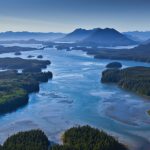
Though separated by geography, these two coastal landmarks serve as major ecological hotspots where common eelgrass (Zostera marina) thrives as a foundational “ecosystem engineer.”
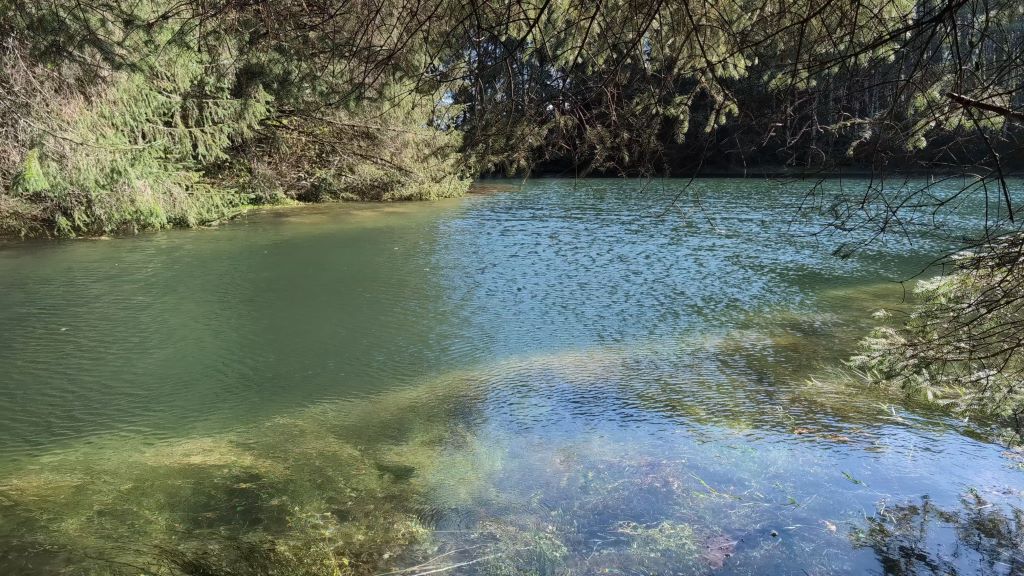
The Sooke Basin, surrounded by dense forests, sandy beaches, and a rugged, pebbly coastline, offers a protected sanctuary. The fresh waters of the Sooke River provide the perfect gentle environment for eelgrass meadows to take root and flourish. Further up the Island’s west coast is Clayoquot Sound – a remote wilderness known for its ancient old-growth rainforests. Eelgrass meadows thrive there along a 25-km gradient of freshwater input, offering a unique setting for studying how freshwater conditions influence these coastal ecosystems. Within its intricate networks of shallow channels and mudflats lies some of the most expansive meadow coverage on Vancouver Island.
Beyond mapping and monitoring, protecting eelgrass meadows requires addressing other threats
Eelgrass meadows are known to capture what is known as “blue carbon” in their waterlogged sediments up to 35 times faster than terrestrial forests. Unfortunately, these coastal powerhouses are among the most threatened ecosystems on the planet. Eelgrass meadows are declining globally, driven by anthropogenic pressures, rising water temperatures (which can cause summer diebacks in warmer zones), agricultural runoff, and physical marine disturbances.
When we lose these meadows, we don’t just lose critical nurseries for salmon and shellfish – we actively weaken our planet’s capacity to buffer atmospheric greenhouse gases.
Since eelgrass is highly sensitive to environmental conditions and human interference, monitoring eelgrass ecosystems is increasingly critical. In 2016, recognizing this urgent crisis, the Commission for Environmental Cooperation identified the Pacific Coast of North America as a high-priority location for seagrass mapping and carbon sequestration research.
Mapping Canada’s eelgrass meadows
Since 2017, Hakai Institute and Parks Canada have been cooperating to map and monitor eelgrass meadows at specific sites in coastal BC. Monitoring starts at low tide, when the eelgrass is fully exposed. Scientists use drones fitted with RGB and multispectral sensors to take high-resolution images of shallow coastal areas.
These images are then compiled into detailed orthomosaic maps, which trained experts analyze using object-based image analysis to identify eelgrass. To ensure the maps are accurate, underwater cameras, SCUBA dives, and shoreline checks are conducted for verification.
The T’Sou-ke First Nation has mobilized a frontline defense against one of the coast’s most persistent invaders.
While this level of detailed monitoring is critical for understanding the condition of eelgrass meadows, other technologies are being explored that could expand mapping and monitoring to the entire BC coast and below the intertidal zone. The Canadian Space Agency is funding development of the Eelgrass Explorer (E2) system – “a prototype Cloud-based processing platform” that uses satellite data and AI models to produce province-wide intertidal eelgrass maps. And while BC’s turbid waters and frequent cloud cover present challenges to geospatial mapping tools like LiDAR, they have been successfully used to map subtidal seagrass in Atlantic Canada and other countries such as Norway, France, and the Bahamas.
Beyond mapping and monitoring, protecting eelgrass meadows requires addressing other threats lurking beneath the waters of Sooke Basin.
Invasive crabs
Since the late 1990s, the European green crab has plagued the the west coast of Vancouver Island, outcompeting native species for food and contributing to eelgrass habitat destruction. The population is rapidly expanding across a wide range of temperature and salinity conditions, leading to a significant decline in the extent of eelgrass meadows.
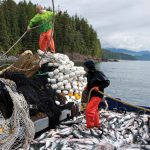
Partnering with the Coastal Restoration Society, the T’Sou-ke First Nation has mobilized a frontline defense against one of the coast’s most persistent invaders. Backed by community volunteers and freedivers plunging into cold coastal waters, the coalition has already cleared hundreds of thousands of the destructive crustaceans from local seabed habitats.
Green crabs are harming vital nurseries for native fish and shellfish. But where others see an environmental disaster, the team sees an opportunity for circular economy innovation, such as exploring ways to turn the massive harvest into organic fertilizer or a novel culinary dish.
Investing in conservation
Much of the Pacific coast’s eelgrass remains hidden beneath the tides, yet its value extends far beyond what is visible. These underwater meadows store blue carbon, nurture marine life, protect shorelines, and strengthen the resilience of coastal ecosystems in a changing climate.
Across BC, scientific monitoring, geospatial technologies, Indigenous stewardship, and community-led restoration are helping to bring these invisible habitats to light so that they can be cared for in the long term. Protecting eelgrass is about more than conserving a marine plant – it is an investment in the health and resilience of Canada’s Pacific coast.
Alefiya Dungrawala is a computer engineer turned geospatial data specialist and writer covering topics related to climate change, environmental systems, and geographic changes.