The abandoned mining shaft cuts deeply into the embankment. Each spring, snowmelt seeps through fissures in the bedrock and drips into the excavation below, forming a pool of clear water more than three feet deep.
Protected from the sun, this moist cave-like place offers a cool refuge and a welcome source of water. Bears come here often, following their noses or some primordial instinct that humans have long forgotten. Cottonwood trees and a patch of wild currant bushes also find their way, weaving tiny roots through cracks in the rock to reach the water’s edge.
I too am drawn to this watery grotto a few dozen steps from my home. I make my way early one April morning as a red squirrel chatters a warning of my presence. I’m met by clumps of moist moss clinging to the rock face, their vibrant new growth glowing fluorescent green in the morning light. The smell of moisture permeates everything and I’m reminded that where water is plentiful, there is an abundance of life.
Behind me, a kilometre away on the other side of the valley, the Granby River weaves her way south. The river is rising now as snowmelt from higher elevations begins to reach her banks from small creeks throughout the watershed. In another month, she will run with fury as the freshet reaches its peak, the rush of water spreading over low-lying fields and filling wetlands before joining the Kettle River at Grand Forks and then flowing on to the Columbia River and the Pacific Ocean.
I can’t deny the despair I often feel at the changes on the landscape.
We take this process for granted. The river, low in winter, rising during spring freshet, then dropping in summer to rise again with fall rains. The cycle repeats each year, but there are signs all is not well with the hydrology of this landscape.
During the past decade, the Kettle River watershed, which includes the Granby and West Kettle Rivers, has suffered periods of debilitating drought. The summer of 2023 was especially bad, with conditions reaching Drought Level Five for several weeks, carrying the warning that “adverse impacts to socio-economic or ecosystem values are almost certain.” The cautious and cumbersome bureaucratic wording belies the severity of the situation.
But government isn’t alone in its use of restrained language. In my neighbourhood, some of us are also cautious with our words. In the heat of summer, we reassure each other the grass isn’t dead, it’s only dormant. We tell ourselves the fields will green up when temperatures cool and the rains come. We “touch wood” that our wells will replenish during the snow melt. But instinctively, underneath our reassuring words, we sense the land is dying of thirst. Maybe we’re afraid to say it out loud because we don’t know what we can do about it.
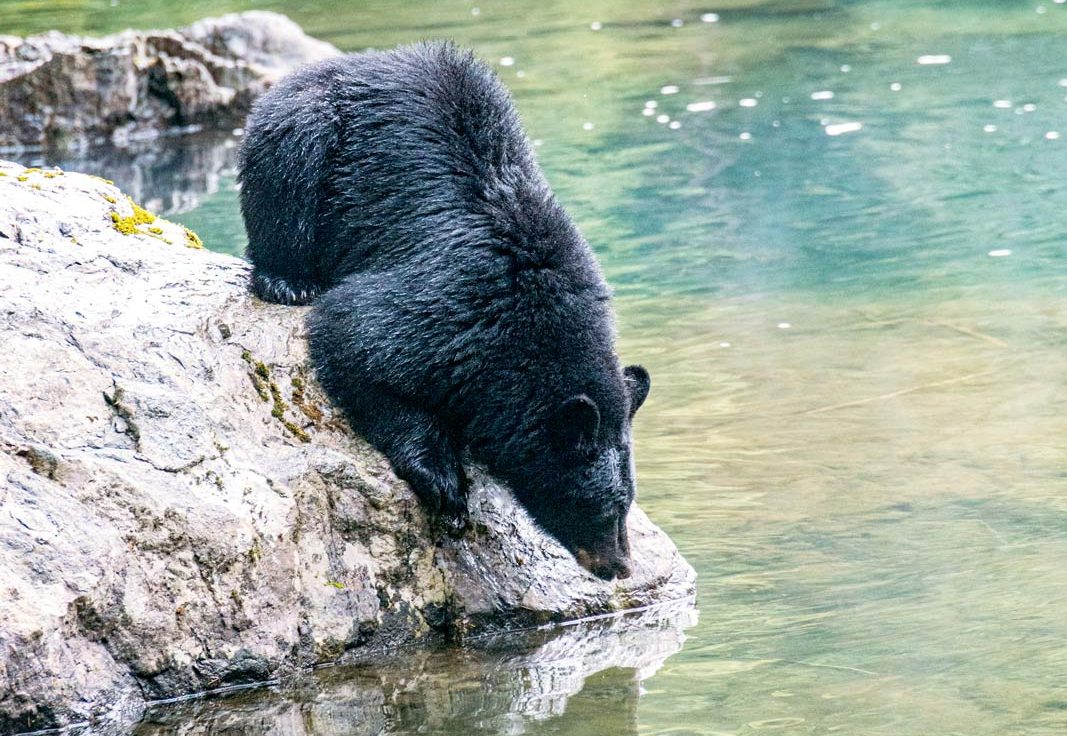
Photo: Rafael Peier/Unsplash
Ecologist Greg Utzig is not afraid to say it out loud. His face is lined with concern as he begins his presentation to a packed community hall during the 2025 Watershed Forum in Grand Forks. His graphs paint a sobering picture of worsening drought and increased fire risk for this landscape. Slide after slide reveals a once-healthy watershed unravelling as climate change brings warmer spring temperatures and fewer summer rains.
Greg knows the climate science. He has studied the data and the projections. And he knows his message is grim. He may also know some of us want to hear a more hopeful message. Something like “and here are several things you can do.” In my seat at the back of the room, I’m waiting for those words. But Greg doesn’t say them. Perhaps he thinks it’s too late.
Although I yearn for a message of hope, I know it can feel empty if it isn’t connected to some form of engagement. “I hope it will rain soon.” “I hope the river isn’t too hot for the fish.” “I hope we don’t have another heat dome this summer.” Passive statements like these feel less like hope and more like pleas of desperation to some unnamed force to please make things okay again. But, as Rebecca Solnit reminds us, hope is not the belief that everything will be fine. It is not “a lottery ticket you can sit on the sofa and clutch.” For Solnit, hope is an active force, “an axe you break down doors with in an emergency.”
When I think of hope as an axe to break down doors, it becomes HOPE in capital letters, an embodied force, not just a wishful fantasy in my mind. I feel it in my arms and legs as my body surges with strength. There is a tenacity in this kind of hope and a determination to “do something.” I need that surge of energy when I find myself slipping into despair.
And I can’t deny the despair I often feel at the changes on the landscape. Temperatures this winter are warmer than normal. On Christmas Day 2025, rain drums on the roof of my house – a worrying sound when there should be six inches of snow on the roof and I should be shovelling a path to the woodshed.
But nothing is as it should be this winter. The snow shovel sits idle on the porch, and instead of snowplows scraping their blades along the road in January, I’m hearing chickadees sounding their spring mating call.
By mid-January the hills across the valley are mostly bare, and only isolated patches of white remain in the fields. There is still snow in the higher mountains, although the snowpack reports become less reassuring as time passed. On February 1, the snowpack drops to 95% of normal, down from 132% on January 1st. By March 1st, it is 75%, and by April 1st, 65% of normal, raising early concerns about drought conditions.
Closer to home, the hydrology is also changing on the small acreage where I live. For as long as I can remember, moisture has oozed out of the hillside near my house for several weeks each spring. I imagine it starting as droplets from melting snow uphill, trickling at first, then gathering volume and momentum until it reaches fissures in the ground where it sinks down to bedrock and then seeps out at the foot of the hill. From there it flows into a small vernal pond which fills up and overflows, soaking the surrounding landscape in ankle-deep water for several weeks.
But this spring, there is no seepage from the hill and no water in the vernal pond. The surrounding landscape is dry and my rubber boots collect dust in the basement.

I ask myself what all this means. Am I seeing a landscape “dying of thirst”? Or, as Terry Tempest Williams asks when observing the loss of water in Great Salt Lake, am I seeing a landscape “dying to stay alive”? Same landscape, two different perspectives. “Dying of thirst” implies a process already underway with the inevitable path to death. “Dying to stay alive” is a reminder of an animate, intelligent Earth with agency. Perhaps both perspectives are valid but, standing here, seeing the lack of moisture on the ground and imagining the implications for the coming summer, I’m painfully aware that how I choose to perceive this landscape will determine how I respond – passively from a state of despair, or actively, in the hope of renewal.
As the calendar turns from April to May and the days begin to heat up, I realize it isn’t hope that gives me strength to face the hydrological changes I’m witnessing on this land. I think it is love. I recall Robin Wall Kimmerer speaking at an event many years ago. “You love the Earth,” she said, “but what would you do if you knew the Earth loved you back?”
In that extraordinary question, Kimmerer reminds us we are in a relationship based on mutual, reciprocal love with an animate, intelligent being. While I can’t begin to grasp the full implications of living from that perspective, I do get a glimpse of the sense of responsibility I would feel. I wouldn’t let myself give in to feelings of despair. I would be more aware that my thoughts and actions matter. They matter to an animate landscape that is “dying to stay alive.”
Margaret Steele has written extensively on affordable housing issues. In recent years, her focus has shifted to writing about the land where she lives, in the Granby Valley north of Grand Forks, BC.