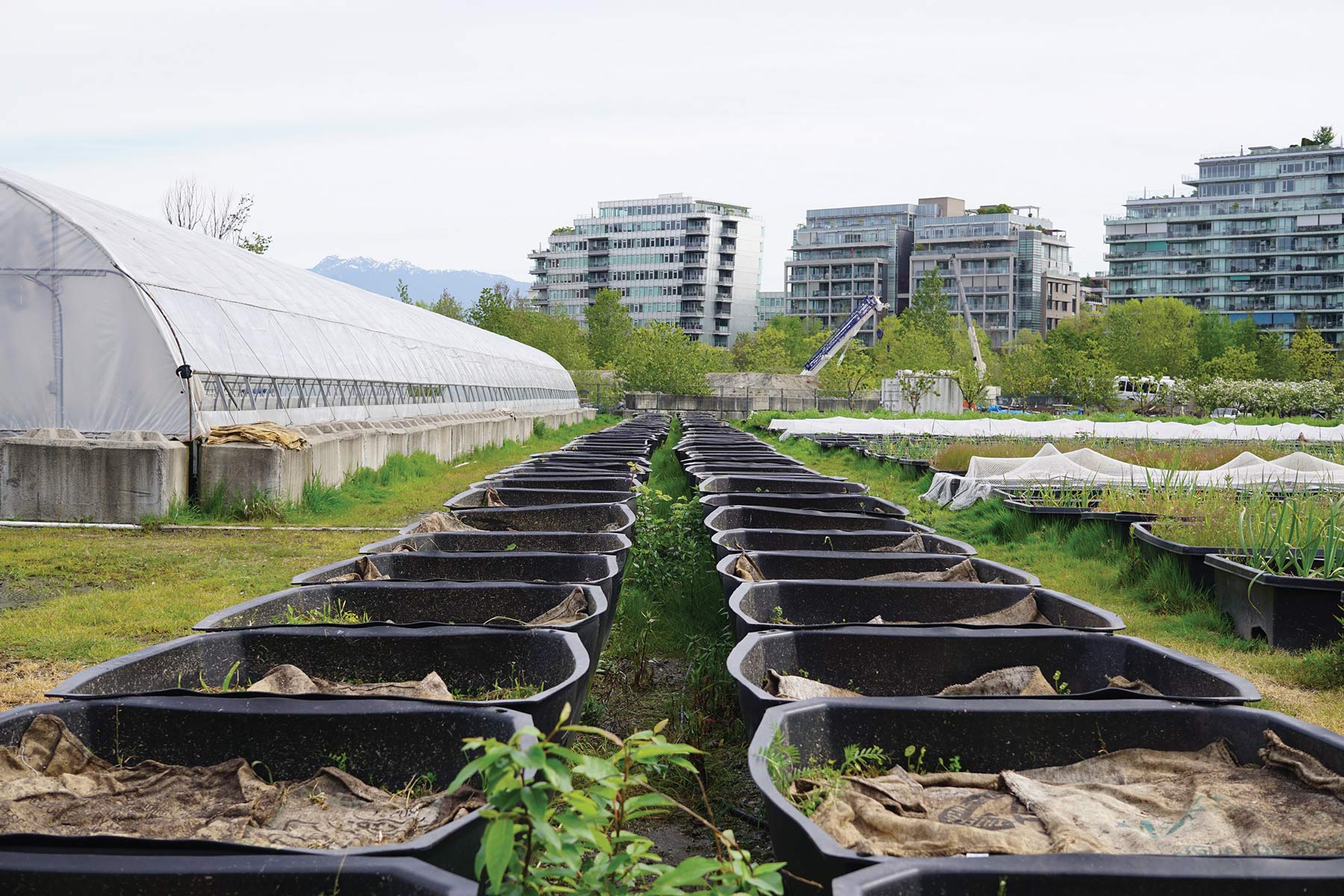
In a forest of downtown Vancouver condos stands a farm built from a vacant lot. As the sun rises, a warm breeze sweeps across the fields, plants, and the farmers working on the site.
Anyone crossing the Cambie Bridge can look down at Sole Food Street Farms near Science World and False Creek, next to canoes in the water and joggers on the seawall.
Sole Food Street Farms has turned a bit of urban land into an agricultural landscape. Since it was founded in 2009, the farm has grown into one of the North America’s largest urban farms, providing fresh, local produce to the public.
During my recent visit to the farm, I met Jennifer Guest-Viitala, known as Nova to her fellow farmers. She is one of more than 40 farmers at Sole Foods Street Farms.
The farm predominantly hires Downtown Eastside residents to receive agricultural training and raise food crops, a portion of which will be donated to community organizations and to Mount Pleasant Neighborhood House.
“The farm has always been helping the vulnerable population,” says Nova. “Part of the farm model from the very beginning was to employ people from the Downtown Eastside with barriers to employment and helping them get past those barriers and move on to normal working.”
When Nova first joined the farm, she had just retired from being an outreach worker who focused on harm reduction. After “letting go of a lot of hard drugs,” Nova says farming gave her a new purpose.
Those same people that I judged turned out to have hearts and souls, incredible creativity, intelligence, and a desire to be functional in the world.
In its early stages, she says, the farm was like a grassroots movement, building with what they could find: boxes, pallets, and black tarps. “But I got to watch a lot of trial and error and also learn about the different plants that grow as weeds” – including edible weeds such as purslane, mugwort, and lamb’s quarters.
Fewer than a dozen farmers worked at the farm when Nova first started. In 2026, the crew size was over 40, the largest since Michael Ableman founded it in 2009.
Watching colleagues pursue their passions is amazing, Nova says. “It’s definitely something very special, like over the last 16 years, I’ve been able to watch people join the farm, grow, change themselves from the inside out, and then move on into working. We’ve got friends that are now running their own farms,” says Nova.
In a 2016 interview with the Vancouver Sun, Ableman says the “heroes” of the farm are the people of the Downtown Eastside who made Sole Food Street Farms happen. When the farm first started, Ableman says he had a lot of prejudices towards the vulnerable population near Hastings Street.

“But those same people that I judged turned out to have hearts and souls, incredible creativity, intelligence, and a desire to be functional in the world. They just need to be given the opportunity, and it is the most important lesson of the book,” says Ableman, referring to his book Street Farm: Growing Food, Jobs and Hope on the Urban Frontier.
The farm moved from its first location at the Astoria Hotel on Hastings Street to its current site, 265 West First Avenue, adjacent to the city’s temporary modular housing projects.
This year, the farmers started growing indigenous plants with the help of ethnobotanists, occupying 2.8 acres of land where farmers work from 9 am to 5 pm, says Mary Clare Zak, the farm’s interim director.
Inside the greenhouses, lettuce, onions, kale, arugula, and mustard greens are growing in Sole Food Street Farms’ patented black plastic boxes. The crops are grown without chemical fertilizers and are harvested by hand using organic farming methods, as the founders directed.
Ahead of rising temperatures, Zak says, better ventilation in the greenhouses is necessary. “The hotter it gets, the more mildew is created, and then that affects the plants and their health.”
The plants are like friends to another farmer at Sole Food Street Farms. Stephen Jiggins suffered through homelessness and unemployment for 40 months.
“I feel like I’m in the middle of my own world,” says Jiggins. “I watch the ants and the bees and talk to the plants, give them names.”
He says he joined the farm after seeing a poster on the wall of the RayCam Cooperative Centre on East Hastings St.
“I felt very unemployable at that time. I had little self-confidence, if any, very low self-esteem,” says Jiggins. Sole Food Street Farm changed that.
“I have self-respect again, I have self-esteem again, have something to get up for in the morning,” says Jiggins. “Through the 10 years I’ve been here, I’ve met the most incredible cast of people – caring, thoughtful, mindful.”
The experience helped him navigate an environment full of poverty, homelessness, unemployment, mental illness and addiction.
Jiggins aims to preserve the farm and make sure it carries on after he eventually retires. However, the possibility of having to move and start from scratch is always present.
The farm’s biggest struggle is lack of land tenure and security, says Zak, who is currently preparing to relocate Sole Food Street Farms. The land is secure for another two years, but there are redevelopment plans for the area, she says.
“I’ve got about eight different ideas on the go right now,” Zak says. “It’s whether any of those pan out, is the question. It’s hard to find land in a city like Vancouver.”
Despite the hazy future ahead of her, every morning, Nova gets her kids ready for school and then puts on her roller skates to commute to the farm.
On arriving, she writes her name down on the whiteboard next to the daily task list. Putting on sturdy rubber boots, she strides across the farm, toward the place that changed her life.
Joonha “Jonah” Jung is a multimedia journalist reporting on international issues, community affairs, cultural issues, and human interest stories. His work has appeared in CityNews Vancouver, Korean Quarterly, Tri-Cities Dispatch, New Canadian Media, and Fraser Valley Today.