In the heart of my hometown, there is a bog. Or is it a swamp? Growing up in Armstrong, I didn’t give it much thought.
A monoculture of ten-foot-tall cattails formed a barricade impenetrable to the eye, and even as an idealistic teen forming an identity around saving the planet, I never asked about this local ecosystem.
But since then, I’ve learned about the value of wetlands. Sustaining biodiversity through habitat creation and mitigating inundation by acting as sponges are examples of the many roles they play. Akin to kidneys, wetlands filter toxic pollutants out of the water, and under the right conditions, they can act as powerful carbon sinks. Sadly, urban development, agriculture, forestry, invasive species, and climate change have created a perfect storm of erasure, leading to a loss of about 90% of low elevation wetlands in the Okanagan and Similkameen regions.
What lies beneath Armstrong’s pavement was once a land filled with water-loving vegetation. It was cleared in the 1870s for market gardens, but over the past 50 years, much of what was farmland has been preloaded to support housing developments. As the town planted more subdivisions on the wetlands, the water table rose, as did residents’ concerns.
In 2017, Armstrong experienced major flooding that caused extensive damage and forced residents to evacuate. One citizen paying close attention was Jill de la Salle, a longtime resident and retired schoolteacher. When she learned that a large parcel of privately owned wetland (one of the last surviving pockets in the downtown core) was designated for housing development, she knew she had to act.
The work of preserving wetlands is not simply a walk in the marsh.
“I didn’t know too much about the superpowers of wetlands when I first started,” de la Salle admits. “I just felt that piece of land needed to be conserved because it was beautiful and was home to so many birds and frogs and so much a part of Armstrong.” In 2018, her daughter urged her to form a society, and she founded the Armstrong Wetlands Association (AWA).
“We were lucky to have a combination of experts and people who are concerned citizens join the group,” de la Salle says. This initial group included biologists who had worked for the Ministry of the Environment as well as local artists who had advocated for the wetlands for years. Once the board was formed, members pooled their skills and began developing a restoration and enhancement plan.
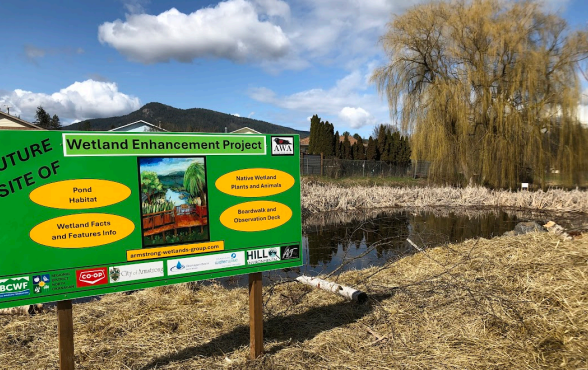
De la Salle’s intention was to protect the privately owned wetland, but after years of efforts, it just wasn’t happening. So, given that even a small step in the right direction holds value, the association focused on a one-acre city-owned parcel. Fortunately, the city was on board, and the Okanagan Street Wetland Enhancement project was launched.
The project’s first phase was an environmental impact assessment in 2023 that resulted in a thorough report detailing all flora and fauna present. The assessment concluded that creating a pond and a hummock would “enhance the biodiversity of the parcel, provide critical wildlife habitat, and benefit the community both aesthetically and ecologically.” AWA got to work on making it happen.
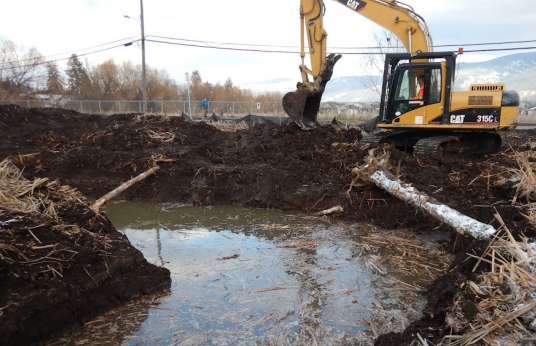
Eventually, in January 2025, volunteers triumphantly excavated a pond on the site, with AWA biologists and a cultural monitor from Splatsin Nation supervising. The hummock formed from the excavated soil was planted the following spring with native grasses, trees, and shrubs.
Community education has always been one of AWA’s core tenets. Early in the project, local high school students put on boots and toured the site, learning about the proposed transformation and its benefits. Then, when the task of planting the hummock was at hand, several classes of secondary students volunteered their time and energy. On planting day, a daycare group spontaneously joined in.
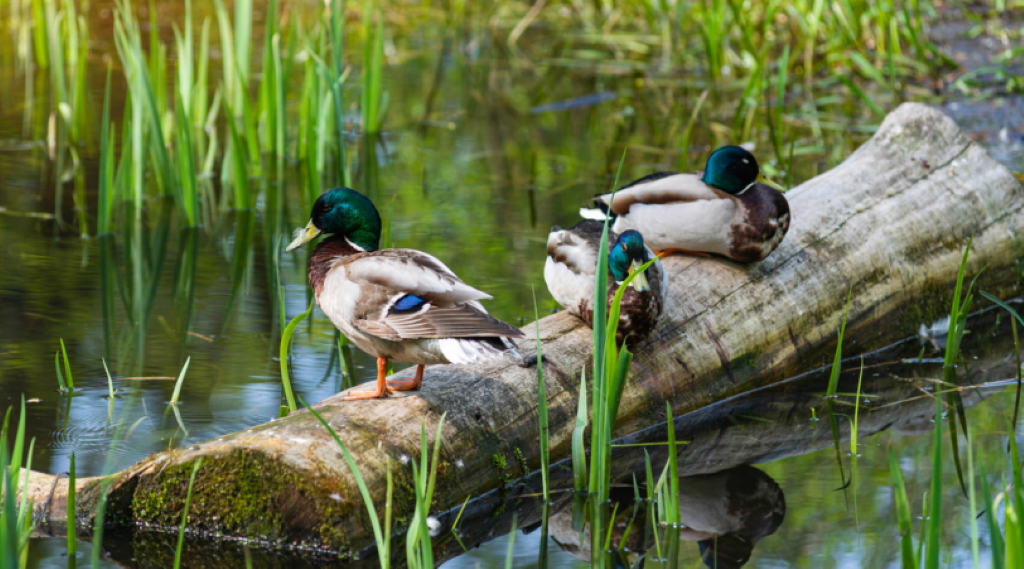
Nootka roses have taken root, and mallard ducks and muskrats have been spotted
“I believe that all the cheering and positive attitudes of everyone here will help the plants to survive and grow,” de la Salle told the crew as she thanked them for coming. More community and student work bees have been organized to water the seedlings and to pull invasive plants.
The assessment recommended building a boardwalk and viewing platform overlooking the pond, complete with informational signage. If such a promenade had existed when I was in school, maybe I wouldn’t have been so wet behind the ears about the merits of the marsh. (Yes, I’ve learned that it is a marsh!)
After land has been secured, sorting out money and bureaucracy are two of the greatest hurdles in this kind of restoration. Getting provincial permits for this project was expensive and time-consuming, but AWA secured a host of grants. Supporters include provincial, regional, and local donors, the BC Wildlife Federation, the local farmers’ market, and local choir and theatre groups. The project cost about $43,000 so far, and building the boardwalk (the final phase) is estimated to cost another $120,000.
At this point, community connection has been revitalized, Nootka roses have taken root, and mallard ducks and muskrats have been spotted. De la Salle is hopeful that the yellow-headed blackbirds she used to see here will return too.
But the work of preserving wetlands is not simply a walk in the marsh. Diverse collaboration is key, and many hours must be spent securing permits, writing grants, and performing community outreach. And it’s hard to make everybody happy. (Some neighbours were nervous about an increase in mosquitoes and drowning risks with the pond, which will be mitigated by bat boxes and warning signs.) There are guaranteed to be setbacks, but focusing on the joy and connection that this work cultivates goes a long way.
De la Salle hopes that “starting with this little piece, we can showcase what we can do,” creating a groundswell of interest that reaches private landowners too.
Claire Majors is a settler and teacher on the unceded territory of the Lək̓ʷəŋən (Songhees and Kosapsum) and W̱SÁNEĆ Peoples.
Photos provided by Armstrong Wetlands Association.