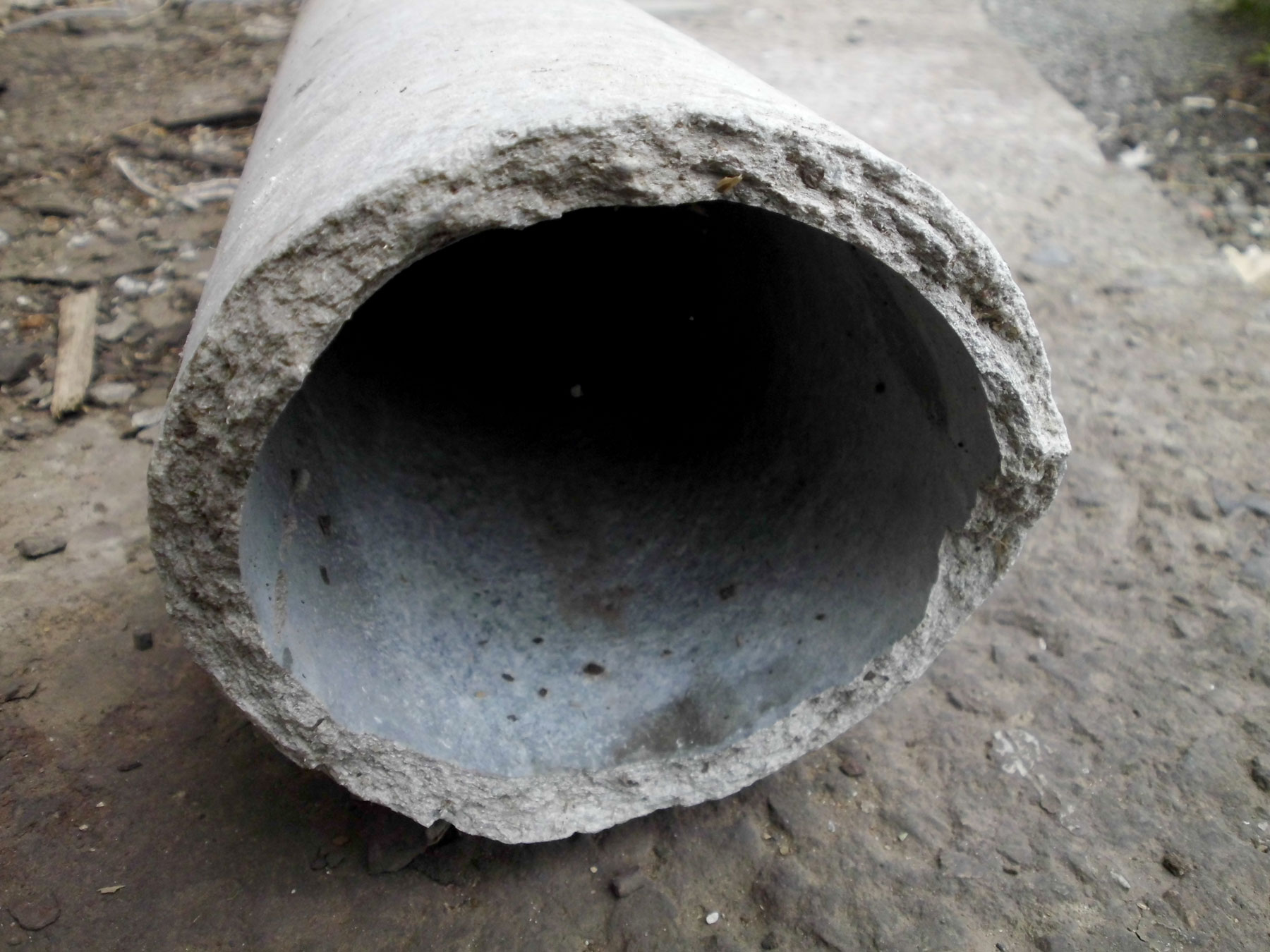
I live in Qualicum Beach, on Vancouver Island in beautiful British Columbia. Qualicum Beach has 26 kilometres of old asbestos cement (AC) water distribution pipes. Like many communities across Canada, I am deeply concerned that our Mayor and Councillors rely on current Health Canada directives and may lack sufficient information regarding the known dangers associated with Asbestos Cement water pipes.
I have been involved in the study of water all my adult life. I take water, and clean drinking water in particular, very seriously.
In my latest book, Water Justice: What You Don’t Know Could Kill You, I document political indifference across parties and connect the decline of Canada’s water quality to the erosion of our democracy. Highlighting contaminated source waters and inadequate protections, the book calls readers to action, emphasizing that safe drinking water requires citizen engagement to overcome government failure and corporate control.
Through the course of my research, I have become aware of a glaring problem with a lack of regulation of asbestos in Canadian water. We are all aware that asbestos is a Group 1 carcinogen when inhaled. Yet in 1989, Canada ruled that there was a lack of consistent, convincing evidence that swallowing asbestos is harmful. In sharp contrast, just three years later, in 1992, the United States Environmental Protection Agency (EPA) would regulate asbestos in water. The reason given for establishing a Maximum Contaminant Level (MCL) at the time was “to protect against cancer.”
It is easy not to find evidence of harm when you do not look for it. It is easy not to find asbestos in water when you do not test for it.
Statistics Canada data reveal nearly 14,000 kilometres of aging asbestos cement water pipes still running beneath Canadian communities. Despite decades of study, Health Canada continues to maintain there is no convincing evidence that ingesting asbestos from these pipes is harmful – and has set no Maximum Acceptable Concentration for asbestos in drinking water. A close reading of Health Canada’s own Draft Guidance on Asbestos in Drinking Water raises serious questions about whether that conclusion is built on accurate or impartial science.
The problems begin with how the document handles its sources. A 2008 National Research Council study is quoted in the Health Canada paper, but with a telling omission. The original study noted that asbestos cement pipes were discontinued in the 1970s due to health concerns tied not only to manufacturing, but to the “possible release of asbestos fibres from deteriorated pipes”. Health Canada’s version drops that second concern entirely. This is not a minor editing choice – it goes to the heart of the question Canadians need answered.
The pattern continues. A 2020 Italian study is cited to support the view that asbestos risks are limited to inhalation in occupational settings. Yet the same study acknowledges that asbestos fibres can migrate through the body following ingestion. A separate 2016 Italian study – whose abstract explicitly concludes that health risks from asbestos may extend beyond inhalation, particularly from long-term daily consumption of drinking water – is not mentioned in the Health Canada paper at all. It is difficult to understand why a document entitled “Draft Guidance on Asbestos in Drinking Water” would omit a study with findings which are directly relevant.
Canada remains the only country in the G7 without national drinking water regulations.
A 2010 National Research Council study, one of a series of ten NRC studies focused specifically on asbestos cement pipes, found that severely deteriorated pipes released asbestos fibres into drinking water and could pose a hazard of malignant tumours of the gastrointestinal tract and other organs. This study is also absent from Health Canada’s guidance document. The words “health concerns” appear repeatedly throughout the NRC series – yet Health Canada appears never to have asked the NRC to define what those concerns are.
The consequences of this selective approach are practical and immediate. Asbestos cement pipes are aging out across Canada. Winnipeg, which has over 740 kilometres of asbestos cement pipes, recorded concentrations of asbestos in its water supply as high as 6.5 million fibres per litre in 1977 – just below the current US EPA limit of 7 MFL. Winnipeg’s water has not been tested for asbestos since 1995.
Health Canada has been examining this issue for nearly fifty years. That longevity has not produced clarity – it has produced a guidance document that omits inconvenient findings and quotes sources selectively. It is easy not to find evidence of harm when you do not look for it. It is easy not to find asbestos in water when you do not test for it.
The Federal-Provincial-Territorial Committee on Drinking Water should direct Health Canada to produce a genuinely impartial assessment of asbestos in drinking water – one that engages with the full body of available evidence. Canadians deserve nothing less. Given our long and troubled history with what was once called the “miracle mineral,” this country has both the responsibility and the opportunity to lead. Canada remains the only country in the G7 without national drinking water regulations. Regulating asbestos in drinking water is an essential first step.
Please review and sign the National Council of Women’s Open Letter to Prime Minister Carney and the federal government. We invite you to help amplify this initiative by sharing it widely with members of your community, colleagues and family.
 Susan Blacklin is a member of the National Council of Women of Canada, which advocates for the health, equality, and well-being of women, families, and communities nationwide. Susan is also the author of Water Confidential: Witnessing Justice Denied. The Fight for Safe Drinking Water in Indigenous and Rural Communities in Canada (2024,) and Water Justice: What You Don’t Know Could Kill You, release date March 22, 2026.