 A cold breeze blew off the Antarctic plain, numbing the noses and ears of scientists standing around a dark hole in the ice. Flecks of ice crackled off a winch as it reeled the last few meters of cable out of the hole. Two workers in sterile suits leaned over to grab the payload — a cylinder the length of a baseball bat — dangling at the end of the cable. They used a hammer to chip away the ice and a blow drier to thaw part of the assembly. “Did it close?” asked the winch operator…..
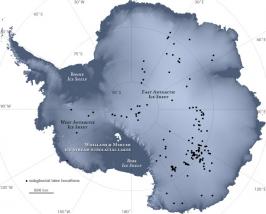
Samples from the lake show that life has survived there without energy from the Sun for the past 120,000 years, and possibly for as long as 1 million years. And they offer the first look at what may be the largest unexplored ecosystem on Earth — making up 9% of the world’s land area. “There’s a thriving ecosystem down there,” says David Pearce, a microbiologist at Northumbria University, UK, who was part of a team that tried, unsuccessfully, to drill into a different subglacial body, Lake Ellsworth, in 2013. “It’s the first time that we’ve got a real insight into what organisms might live beneath the Antarctic continent,” he says.